Stop water at the source.
Level the slab that sank.
French drains, yard regrading, underground downspout drains and foam concrete leveling for homes on the heavy clay soils north and east of Austin.
- French drains
- Foundation drainage
- Slab leveling
- Free estimates
Get a free estimate
Tell us where water collects or which slab has settled.
Yard drainage and concrete leveling in Pflugerville and northeast Austin
Pflugerville Drainage Pros fixes standing water, soggy side yards, washed-out beds and sunken concrete for homes in Pflugerville and the clay-soil suburbs north and east of Austin.
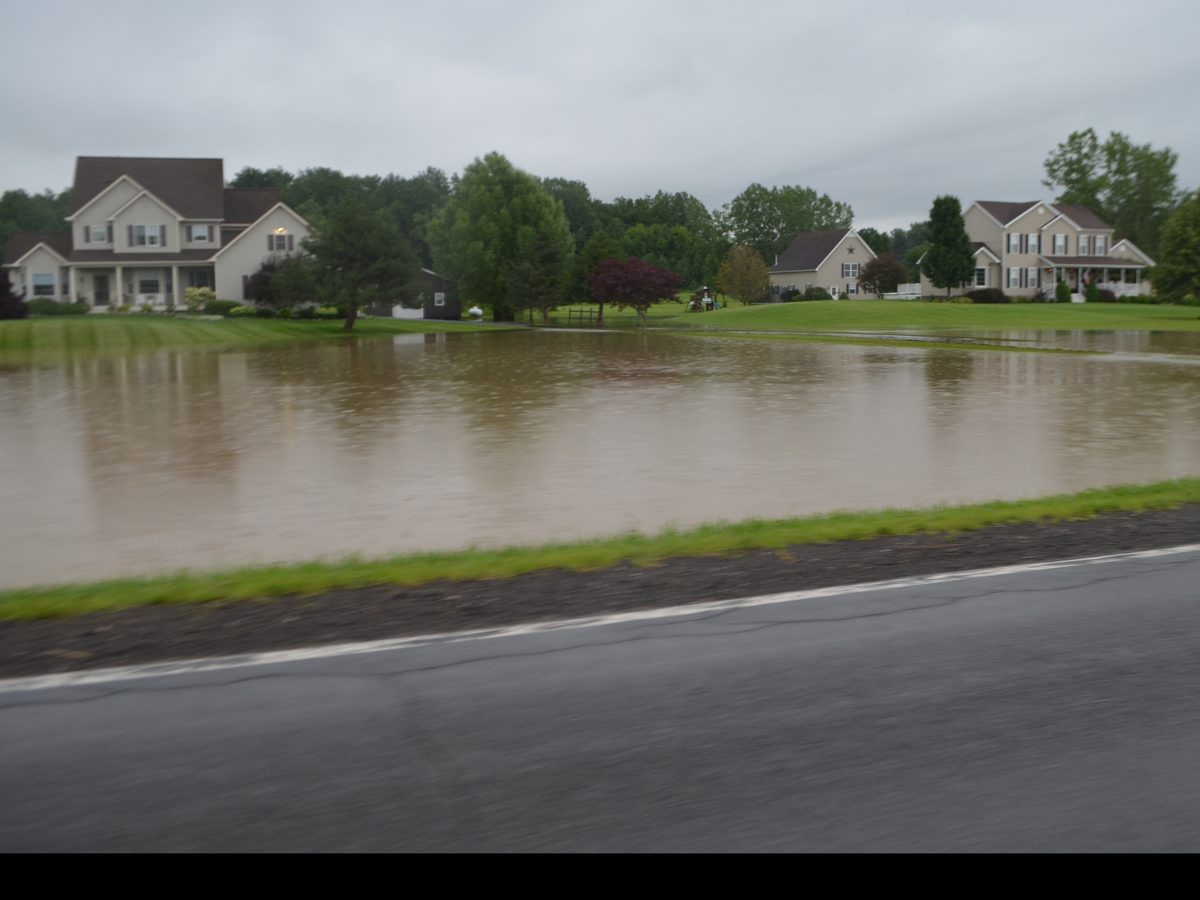
Water problems in this part of Texas tend to look alike. A storm rolls through, the backyard turns into a shallow pond, and the water is still there two days later. Mulch washes onto the sidewalk. The downspout by the garage carves a little ditch along the slab. A year or two later, the front walk has a lip where one panel dropped, and the driveway no longer meets the garage floor cleanly.
Most of the time, those problems share a cause. The ground here is heavy clay, and clay does two things that matter. It takes in water very slowly, so rain sits on top instead of draining. And it swells when wet and shrinks when dry, so the concrete resting on it gets pushed and dropped over the seasons. Fixing drainage and leveling concrete go together for that reason. If you lift a sunken patio but leave the downspout that undermined it, you will likely see it sink again.
We install French drains, regrade yards, bury downspouts, add catch basins and channel drains, and set dry wells and pop-up emitters where they make sense. On the concrete side, we lift settled slabs with polyurethane foam and seal the cracks and joints that let water in. We do not do structural foundation repair. When a house shows signs of foundation movement, we will tell you plainly and point you to a structural engineer or foundation repair company.
Drainage and concrete services
Each service has its own page that explains how the work is done, what changes the cost and what to watch for on clay soil. Not sure which one you need? Start with the warning signs below, or ask us to walk the yard.
- 01
French Drain Installation
Buried perforated pipe in a gravel trench that collects soggy soil water and carries it to a safe exit away from your home.
Learn more - 02
Yard Drainage & Regrading
Regrading, swales, and surface drainage fixes that move rain off your lawn and keep it away from your home's foundation.
Learn more - 03
Underground Downspout Drains
Buried solid pipe that carries roof runoff from your gutters well away from the foundation to a safe, legal discharge point.
Learn more - 04
Catch Basins & Channel Drains
Surface drains that capture runoff from low spots, patios, and driveways and send it through buried pipe to a safe outlet.
Learn more - 05
Dry Wells & Pop-Up Emitters
Underground gravel pits and pop-up outlets that give collected rainwater a safe place to go when your yard has no easy exit.
Learn more - 06
Foundation Drainage
Perimeter drains, grading and gutter discharge that move rain away from your slab so the clay soil around it stays steadier.
Learn more - 07
Concrete Slab Leveling
Foam concrete leveling lifts sunken patios, walkways and garage aprons back into place without tearing out the slab.
Learn more - 08
Driveway & Sidewalk Leveling
Lift sunken driveway panels and sidewalk squares back to grade to remove trip hazards and stop water from pooling.
Learn more - 09
Concrete Crack & Joint Sealing
Seal cracks and control joints in driveways, patios and walks to keep water out of the soil and slow further damage.
Learn more
How Blackland Prairie clay moves water and concrete
The soil under most homes east of I-35 is clay with a very high shrink-swell potential. It is great for growing crops, and it is hard on yards, sidewalks and slabs. These four things explain most of the calls we get.
Deep, heavy clay
Pflugerville, Hutto, Manor and Taylor sit on the Blackland Prairie, a belt of dark clay that runs east of I-35. Soils like Houston Black are rich farmland, but they have a very high shrink-swell potential. The clay can swell a lot when it is wet and pull back hard when it dries.
Water soaks in slowly
Clay particles are tiny and pack tight, so rain moves into the ground very slowly. On a flat lot, water sits on top for hours or days instead of draining away. That is why a yard can look like a pond after a storm even when the rain has stopped.
Drought opens cracks
In a long, hot Texas summer the clay dries out and shrinks. Cracks wide enough to fit a finger can open in the lawn, and soil pulls away from slab edges and the undersides of sidewalks. When the soil shrinks, the concrete on top of it loses support and can drop.
Heavy rain after dry spells
Central Texas often swings from drought to a hard rain in a short time. Water rushes into the open cracks, the clay swells again, and runoff can wash soil out from under concrete. Each cycle moves the ground a little, and the damage builds up over the years.
The ground is not the same everywhere we work. West of roughly I-35, around Cedar Park and Leander, the land climbs toward the limestone hills of the Edwards Plateau. Soil there is often thinner, with rock close to the surface and pockets of clay in between. Water tends to run off fast instead of soaking in, and digging a trench can mean cutting through rock. Round Rock and Georgetown straddle that line, so two homes a few miles apart can have very different soil.
Many homes in the area also sit on fill soil that builders brought in and spread before pouring the slab. Fill can settle for years, and new lots are often graded just enough to pass inspection. Once fences, patios, sod and flower beds go in, the original drainage paths often get blocked. That is one reason newer neighborhoods have as many drainage calls as older ones.
Surface drain, French drain or regrading?
These three fixes solve different problems, and on clay soil the right answer is often a mix. A rule of thumb: if you can see the water moving on top of the ground, start with grading and surface drains. If the ground stays soggy with no puddle, a French drain may be the better fit.
Read the full comparison| Feature | Surface drain | French drain | Regrading |
|---|---|---|---|
| What it handles | Water that is already sitting or flowing on top of the ground | Water that soaks into the soil and keeps the ground soggy | The shape of the yard, so water runs where you want it |
| How it works | A grate or basin catches water and a solid pipe carries it to an outlet | A gravel trench with a perforated pipe collects water below the surface and moves it downhill | Soil is added, removed or reshaped so the ground slopes away from the house and toward a safe outlet |
| Best for | Patios, low spots near walkways, downspout tie-ins and driveway edges | Side yards that stay wet, seepage along a slope and long soggy strips | Flat or backward-sloped yards and soil that has settled against the slab |
| On heavy clay | Works well, because it does not rely on the soil to absorb water | Can help, but clay feeds water to the pipe slowly, so trench design and outlet matter a lot | Often the first fix, because clay sheds water best when it has a real slope |
| Upkeep | Clear leaves and grass clippings from grates a few times a year | Keep the outlet open and avoid planting trees right over the line | Watch for new low spots and keep mulch beds from building up against the wall |
Signs your yard or concrete needs attention
Drainage problems on clay usually start small and grow a little with every storm and every dry spell. Walk your yard during or right after a hard rain and look for these:
- Puddles that stay in the yard more than a day after rain
- Water pooling against the foundation or running toward the house
- Downspouts that dump right next to the slab and wash out mulch or soil
- Soil, mulch or grass washing across the sidewalk or driveway after storms
- A sidewalk panel, patio or driveway slab that has dropped and created a trip edge
- Gaps opening between the driveway and garage floor, or between a patio and the house
- Cracks in the yard wide enough to fit a finger during dry summer weeks
Some signs point past drainage. New stair-step cracks in brick, doors that suddenly stick, or a floor that slopes can mean the foundation itself has moved. Have a structural engineer or foundation repair company look first. Our foundation drainage page explains how drainage fits in once the structure has been checked.
What happens when we come out
- 01
You call or send a request
Tell us your address and what you are seeing. Photos or a short video from the last rain help a lot, especially if they show where water comes from and where it collects.
- 02
We walk the property
We look at the roof edges, gutters and downspouts, the slope along the slab, low spots, neighbor runoff and where water can safely leave the lot. For concrete, we check how far each slab has dropped.
- 03
A written plan and estimate
You get a plain explanation of what is causing the problem and the options that fit. If something looks like a structural foundation issue, we will say so and suggest an engineer or foundation company.
- 04
Approvals, 811, then the work
Before any digging, the job is called in to Texas811 so buried utilities can be marked. If your HOA or city needs to approve the work, that happens first. Then the drains go in or the concrete gets lifted.
A good drainage plan has to answer one question: where will the water go? On a typical suburban lot, the safe places are the street, a drainage easement or a natural swale. Water should not be sent onto a neighbor's yard. Texas Water Code Section 11.086 says a person may not divert or impound the natural flow of surface water in a way that damages someone else's property. We plan outlets with that in mind. If you are in a dispute with a neighbor over water, talk to a lawyer.
Concrete leveling visits work a little differently. We look at each sunken slab, measure how far it dropped and check what is feeding water under it. Our concrete slab leveling page explains how foam lifting works, how it compares to mudjacking and why sealing the joints afterward matters on clay.
Based in Pflugerville, working across the clay-soil suburbs
Home base is Pflugerville, in northern Travis County. From there we cover Round Rock and Georgetown up I-35, Hutto and Taylor out along US-79, Manor and Elgin to the east along US-290, and the neighborhoods of northeast Austin, Wells Branch and Brushy Creek. We also work in Cedar Park and Leander, where the ground changes to limestone with clay pockets.
Each town has its own soil, housing age and rules for drainage work. HOA approvals, drainage easements and curb outlets are handled differently from one city to the next. Our town pages cover what we see in each area and what to check before work starts.
View all service areas- Pflugerville Travis County
- Round Rock Williamson County
- Hutto Williamson County
- Manor Travis County
- Georgetown Williamson County
- Taylor Williamson County
- Elgin Bastrop County
- Wells Branch Travis and Williamson Counties
- Northeast Austin Travis County
- Brushy Creek Williamson County
- Cedar Park Williamson County
- Leander Williamson County
Simple habits that protect your yard and slab
Drains and leveling fix what has gone wrong, but everyday habits keep small problems from coming back. None of these need special tools.
Keep downspouts extended
Each downspout should drop water several feet from the house onto ground that slopes away. Put extensions back after mowing, and check them after storms.
Keep the grade sloped away
The soil next to the slab should fall away from the house. Do not pile mulch or new beds up against the wall, and fill in low spots that form as soil settles.
Water evenly in drought
On clay, many foundation pros suggest steady watering a little way out from the slab during long dry spells, all the way around. Follow your city watering rules.
Call 811 before you dig
Texas law requires notice to Texas811 before digging, generally at least 48 hours ahead, not counting weekends and holidays. Even small trenches can hit gas or fiber lines.
Want more detail? Read about watering a foundation on clay soil during drought and how to call 811 before digging in Texas.
Drainage and leveling questions we hear most
Can't find your answer? Call us at (512) 851-0492 or browse the full FAQ.
Full FAQWhat areas do you serve?
We are based in Pflugerville and work across the suburbs north and east of Austin. That includes Round Rock, Hutto, Manor, Georgetown, Taylor, Elgin, Wells Branch, Brushy Creek, Cedar Park, Leander and northeast Austin. Most of these towns sit on heavy clay soil, which is why drainage and sinking concrete come up so often here. If your address is between two of these towns, or just outside them, call and ask. We will tell you if we can reach you.
What is the difference between a French drain and a surface drain?
A surface drain catches water that is already sitting on top of the ground. It uses a grate, such as a catch basin or channel drain, connected to a solid pipe that carries the water away. A French drain is a trench filled with gravel and a perforated pipe. It collects water that soaks into the soil and moves it downhill underground. Surface drains are best for puddles, patios and downspouts. French drains are best for ground that stays soggy. Many yards need a mix of both.
Why does clay soil cause so many drainage and concrete problems?
Much of the land east of I-35, including Pflugerville, Hutto and Taylor, sits in the Blackland Prairie. Its dark clays, such as Houston Black, have a very high shrink-swell potential. When they get wet they swell, and when they dry out they shrink and crack. Clay also lets water soak in very slowly, so rain tends to run off or puddle instead of draining. That swelling and shrinking can tilt sidewalks, sink patios and stress slabs. Even, steady moisture and good drainage help limit the movement.
Why does water stand in my yard for days after it rains?
On clay soil, the most common reasons are a flat or reversed grade, low spots that formed as fill soil settled, and clay that soaks up water very slowly. Downspouts that dump right next to the house add a lot of water to one small area. Sod laid on compacted builder fill, or a neighbor's yard that drains onto yours, can also be part of it. Watch where the water comes from during a storm and where it sits afterward. That tells you a lot about which fix fits.
Can I just extend my downspouts instead of burying them?
Often, yes. A simple extension that drops water several feet from the house on ground that slopes away is a cheap and effective first step. The trouble is that above-ground extensions get kicked, mowed over and moved, and they can cross walkways. Underground downspout drains carry roof water through a solid pipe to a pop-up emitter or other outlet farther from the slab. They make more sense when you need to move water a long way or when extensions keep getting in the way.
Is it legal to send my yard drainage toward my neighbor?
Be careful here. Texas Water Code Section 11.086 says a person may not divert or impound the natural flow of surface water in a way that damages another person's property by overflow. A neighbor who is harmed can seek damages in court. In plain terms, you should not change your yard so that it sends new or concentrated water onto a neighbor. A good drainage plan keeps water on a path to the street, an approved outlet or a natural drainage route. For a dispute, talk to a lawyer. This is not legal advice.
Do I need to call 811 before installing a French drain?
Yes. Texas law requires anyone digging to notify the Texas811 one-call center before the work starts. Under current state rules, notice generally must be given at least 48 hours ahead, not counting weekends and legal holidays, and no more than 14 days ahead. Utility owners then mark their buried lines with paint or flags. Private lines, like sprinkler pipes or a line to a backyard light, are usually not marked, so plan around those too. Check Texas811 for the current rules before you dig.
Do I need a city permit or HOA approval for drainage work?
It depends on where you live and what the job involves. Many HOAs in the Pflugerville and Round Rock area ask for approval before changes to grading, landscaping or anything visible from the street. Some cities have rules about drainage easements, outlets at the curb and changing the grade along a lot line. Work inside a drainage easement may need city sign-off. The rules differ from one city and HOA to the next, so check with yours before the work starts.
Guides for clay-soil homeowners
Drainage Checklist Before Storm Season: A Central Texas Yard Walk-Through
Use this drainage checklist before storm season to check gutters, downspouts, grading, slabs and drains in your Central Texas yard before heavy rain arrives.
Read guidePop-Up Emitter Problems and Fixes: A Homeowner's Guide
Pop-up emitter not draining, stuck shut, or backing up? Learn the common causes, easy fixes you can try, and when the problem is bigger than the lid.
Read guideDriveway and Sidewalk Trip Hazard Repair: Options Explained
Driveway and sidewalk trip hazard repair options explained: when to lift, grind or replace uneven concrete, what the ADA rule says, and what to check first.
Read guideWater pooling or concrete sinking?
Call or send a request. We will look at where the water goes, check the grade and give you a written estimate.