Pflugerville & the Northeast Austin Suburbs
Underground Downspout Drains
An underground downspout drain connects your gutter downspouts to buried solid pipe that carries roof water to a safe outlet far from the house. It is one of the most direct ways to keep water off the soil beside your slab. Here is how the system works, what it costs, and what to check around Pflugerville and the Austin suburbs.
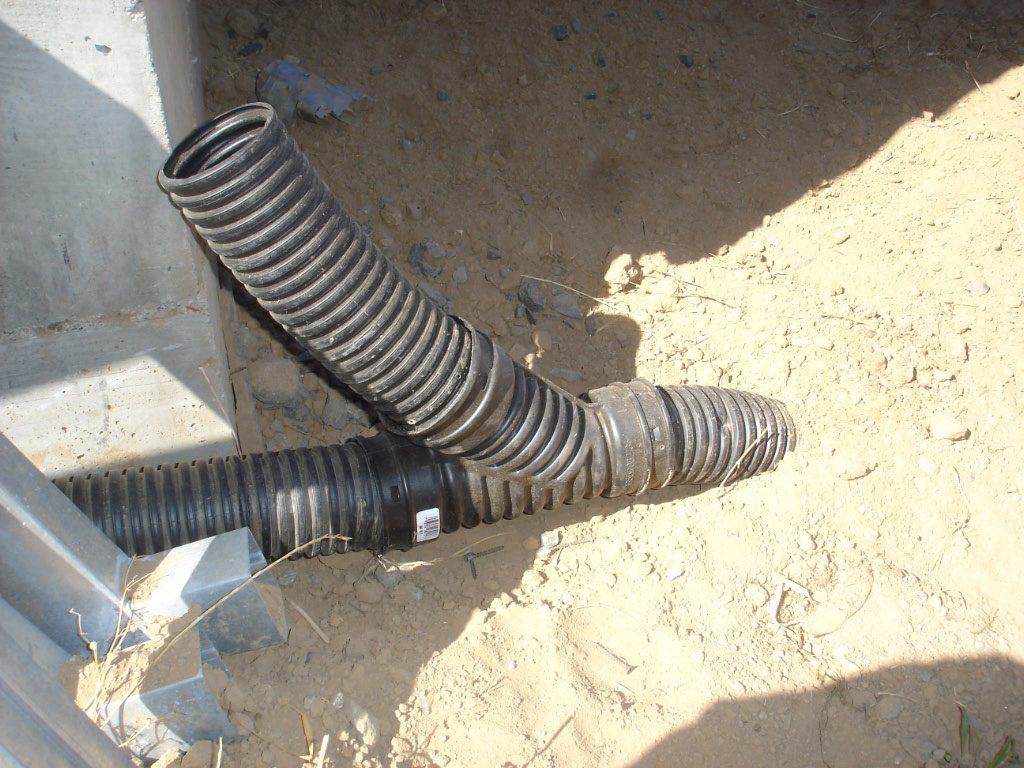
A roof collects far more water than most people picture. As a rough rule, one inch of rain falling on 1,000 square feet of roof produces about 600 gallons of water. A typical single-story home in the Pflugerville area may have well over 2,000 square feet of roof, so a one-inch storm sends more than a thousand gallons down the gutters in a short time. All of it exits through a few downspouts. If those downspouts simply spill onto the ground beside the slab, that water soaks the soil right where the foundation needs steady, even moisture, and it often runs along the wall or across the lawn toward your neighbor. Multiply that by every storm in a wet spring and the soil beside the slab rarely gets a chance to dry out.
An underground downspout drain fixes that by catching the water at the bottom of each downspout and sending it through buried pipe. The setup usually starts with a downspout adapter that connects to solid, non-perforated pipe, often four-inch PVC or corrugated pipe with a smooth interior. The pipe is buried in a shallow trench with a steady downhill slope. It runs ten to thirty feet or more from the house, and then it ends at a pop-up emitter, a daylight outlet at a lower part of the lot, a catch basin, a dry well, or a connection to a storm system where the city allows it. Cleanouts at the base of each downspout let you flush leaves out later, and a grate or screen keeps debris from entering the line in the first place.
The word solid matters. A French drain uses perforated pipe because it is meant to collect groundwater along its length. A downspout drain does the opposite. It is meant to move roof water from point A to point B without leaking any of it back into the soil near your house. If perforated pipe is used by mistake, or if joints are left unglued and loose, the water you tried to send away seeps out beside the slab. For that reason, downspout drains use solid pipe with sealed or tightly fitted joints, and they are tested with a hose before the trench is covered. Ask any installer to show you the pipe type and the test before the trench is closed; it takes only a few minutes.
In expansive clay such as the Blackland Prairie soils across Pflugerville, Hutto, Manor, and Taylor, the effect of roof water is especially strong. Clay near a slab swells when wet and shrinks when dry, so uneven moisture around the perimeter can push and pull a foundation in different directions. Roof water adds a heavy, repeated dose of moisture to one spot. Moving it twenty feet away does not eliminate foundation risk by itself, but it removes a major and avoidable source of wetting. It also keeps soil from eroding into a trench beneath the downspout, which is a common spot for settlement and cracked flatwork. Pairing buried pipe with a corrected slope along the wall adds a second layer of protection for the same area.
Underground is not always the right answer, and it helps to know the alternatives. A simple above-ground downspout extension or a hinged extension that flips up for mowing costs very little and works if the yard has enough slope and open space. Buried pipe makes more sense when you have a narrow side yard, a patio or walkway in the path, a mower and kids who trip over extensions, or a flat lot where water needs a defined route. A combination is common: some downspouts go underground while others use a short surface extension to a flower bed or a rain barrel for watering. Seeing how your own lot drains during a real storm is the quickest way to choose between them.
Where the water finally lands deserves careful thought, because the destination creates the legal and practical risk. Under Texas Water Code Section 11.086, you may not divert or impound the natural flow of surface water in a way that damages the property of another. Dumping a concentrated stream at a shared fence line or onto a neighbor's yard can create that kind of problem. Many cities also limit connections to the street or storm sewer, and HOAs may regulate visible pop-up emitters. Check with your city or HOA before you finalize an outlet, and if a dispute with a neighbor develops, a lawyer can advise you on your options. Keep any written approvals with your home records so a future buyer or inspector can see that the outlet was allowed.
Signs you may need underground downspout drains
- Downspouts that end right next to the foundation
- A trench of eroded soil or exposed gravel under a downspout
- Water streaming along the foundation wall during rain
- Cracked or sunken splash blocks and walkways near the downspout
- Mud, mildew, or dampness along the base of exterior walls
- Gutters that overflow because downspouts back up
- Soggy lawn directly below a roof valley or downspout
Underground Downspout Drains on clay-soil lots
Pflugerville and the neighborhoods around it sit mostly on clay that holds water tightly. Roof water that lands beside the slab does not drain away quickly, so it keeps the soil wet for days. Burying downspouts here is often more valuable than in sandier parts of Texas where the ground absorbs water fast.
Many homes in Round Rock, Hutto, and Georgetown have narrow side yards between houses, sometimes only five to eight feet wide and shared with a swale. Pipe routes there have to respect the swale and not block it. An outlet that sends water along a side yard needs a path that does not flood the neighbor.
Pecan Street, FM 685, and the older parts of Pflugerville include homes with mature trees. Oak, pecan, and hackberry roots can crush or invade thin pipe over time. Rigid pipe, good joints, and routes that avoid large root zones help the system last, and cleanouts allow roots to be cleared before a line blocks.
Texas storms can dump an inch of rain in under an hour. A single downspout can carry several gallons a second in that burst. Outlets need space and an erosion-safe landing, such as rock or a pop-up emitter with a splash apron, or the soil at the discharge point washes away within a season.
Some cities and HOAs limit where roof water may go. Connecting to a street curb or a storm inlet is allowed in some places and prohibited in others, and visible hardware may need HOA review. Check with your city or HOA, and do not point an outlet at a creek bank or easement without approval.
Our underground downspout drains process
- 01
Map the gutters and downspouts
We note every downspout, what roof area it serves, and where it lands now. Larger roof sections and valleys concentrate more water, so they get priority. We also check that gutters are clear and well pitched, because clogged gutters spill over the edge and send water to the foundation anyway, even when downspouts are piped away.
- 02
Pick the outlet first
The discharge point drives the whole design, so we choose it before laying out the pipe. We look for a lower part of your lot, an approved connection, a catch basin, or soil that can support a dry well. Rules vary by city and HOA, so any shared lot line, easement, or street connection is checked first.
- 03
Call 811 and lay out the route
Texas law requires a call to 811 at least two business days before digging, excluding weekends and holidays. Public utilities mark their lines at no charge. We paint the pipe route, steer around known irrigation lines and tree roots, and keep the path as straight as possible with gentle bends instead of tight corners.
- 04
Trench and set the pipe on a steady slope
Trenches are usually shallow, deep enough to protect the pipe from mowers, edging tools, and foot traffic. The bottom is graded so the pipe falls at least one-eighth inch per foot, often a quarter inch, so water and debris keep moving. Solid pipe is joined with proper fittings and connected to each downspout.
- 05
Add cleanouts and the outlet fitting
A small cleanout at the base of the downspout and at major turns lets leaves or roof grit be flushed out later. The pipe ends in the chosen outlet, such as a pop-up emitter that opens under flow and closes when dry, or a daylight spout with a rock apron to slow the water and prevent erosion.
- 06
Test with water and restore the lawn
Before we backfill, we run a hose into each downspout connection and watch the outlet and the joints. Any leak is fixed first. Then the trench is filled and compacted in layers, sod is replaced or reseeded, and the area is graded so no new low spot forms above the pipe. We also show you where each cleanout sits.
What affects the cost of underground downspout drains
Number of downspouts
Each downspout is a separate connection, and a home with six or eight of them costs more than one with three. Some downspouts can share one main line, which lowers the cost per connection. The layout of the roof decides how many can combine, so we look at the whole house, not each downspout in isolation.
Pipe length and trench difficulty
Longer runs and deeper trenches add materials and labor. Hard, dry clay in August is slower to dig than moist soil in spring. Roots, rock, and existing sprinkler lines slow the work further. Where a trench must cross a walkway or driveway, boring or cutting concrete becomes a separate cost. Access matters too.
Outlet type
A simple pop-up emitter costs less than a dry well, which needs excavation, gravel, and soil that can absorb water. A connection to a street curb or storm inlet may require city permission. Outlet choice is often the biggest swing in the total price, so it is worth discussing before the trench is dug.
Pipe quality and fittings
Rigid PVC with solvent-welded joints is sturdier and tighter than thin corrugated pipe with push-on fittings, though it costs more. Cleanouts, pre-built downspout adapters, and quality emitters add to the price but keep the system maintainable. Cheap fittings are a common source of leaks and clogged lines later. Ask which parts will be used.
Restoration and add-ons
Putting the lawn back, replacing broken flatwork, and adding gutter guards or new gutters are add-ons that change the total. General market pricing for buried downspout drains varies widely by site, so any figure you see online is a ballpark and not a quote. A visit lets us itemize what your house needs. Ask for each downspout to be priced.
Underground Downspout Drains FAQs
How far from the house should downspout water be sent?
A common recommendation is at least four to six feet, and ten feet or more is better on clay soils that stay wet for a long time. Buried pipe makes longer distances practical. The right distance also depends on your lot size and slope, since the water needs a legal, safe place to land and cannot simply be pushed onto a neighbor.
Can I connect downspouts to a French drain?
In most cases, you should not. A French drain is built to collect groundwater through perforated pipe, and a sudden burst of roof water can overload it or push silt into the gravel. Downspouts should go on their own solid pipe to a separate outlet. Some designs do tie the two systems into one outlet downstream, but that needs careful planning. Ask for the design in writing.
What is a pop-up emitter, and does it work in clay?
A pop-up emitter is a capped fitting at the end of a buried pipe. Water pressure lifts the cap during rain and releases the water onto the lawn, and the cap drops closed afterward. It works well on a lot with enough slope and open space to spread the water. On flat clay, it needs room, since the water may pool nearby.
Do I need to call 811 before digging a downspout trench?
Yes. Texas law requires notice to Texas811 at least two business days before excavation, not counting weekends or holidays, and that applies to homeowners too. Public utilities will mark their lines for free. Private lines, like irrigation or landscape lighting, usually are not marked, so point out anything you know about to the crew. Call early so your start date is not pushed back.
Will buried downspout pipe clog with leaves or roof grit?
It can, especially under oak or pecan trees. Gutter guards or leaf screens reduce what enters the pipe. A cleanout at the base of the downspout lets you flush the line with a hose, and a pop-up emitter that is sealed or caged will not let animals nest inside. A yearly check of the outlet after leaf season keeps flow steady.
Does moving downspout water help my foundation?
It helps by removing a large, repeated source of moisture near the slab. On expansive clay, steady moisture around the perimeter matters. It is not a structural repair. If you notice widening cracks, doors that stick, or gaps around trim, have a structural engineer or foundation repair company evaluate the house in addition to fixing the drainage. Both jobs matter, and they are separate.
Is it okay to send downspout water to the street?
Some cities allow it through a curb outlet or a connection to a storm inlet, and others restrict or prohibit it. The rules and any permit requirements vary, so check with your city before building a route to the street. Never send the water across a sidewalk in a way that creates an icy or slippery hazard for people walking by.
How long do underground downspout drains last?
Solid PVC pipe can last for decades when it is installed on a steady slope with sealed joints and kept clear. Weak points are usually the fittings, the emitter, and roots. A quick check each spring and fall to run a hose through the line and watch the outlet will catch most problems before they cause damage. Leaf season matters most.
Underground Downspout Drains near you
- Underground Downspout Drains in Pflugerville
- Underground Downspout Drains in Round Rock
- Underground Downspout Drains in Hutto
- Underground Downspout Drains in Manor
- Underground Downspout Drains in Georgetown
- Underground Downspout Drains in Taylor
- Underground Downspout Drains in Elgin
- Underground Downspout Drains in Wells Branch
- Underground Downspout Drains in Northeast Austin
- Underground Downspout Drains in Brushy Creek
- Underground Downspout Drains in Cedar Park
- Underground Downspout Drains in Leander
Water pooling or concrete sinking?
Call or send a request. We will look at where the water goes, check the grade and give you a written estimate.