Northeast Austin · Travis County
Catch Basins & Channel Drains in Northeast Austin, TX
Catch basins collect water in low corners, and channel drains cut across driveways, patios and garage aprons. In Northeast Austin they are common at the bottom of sloped driveways and in infill lots where new grading funnels water. Both connect to solid pipe so collected water leaves the area completely. Grates are sized for cloudbursts rather than light showers, and set where a rake or hand can reach them. A low spot beside an infill house is a typical spot for one.
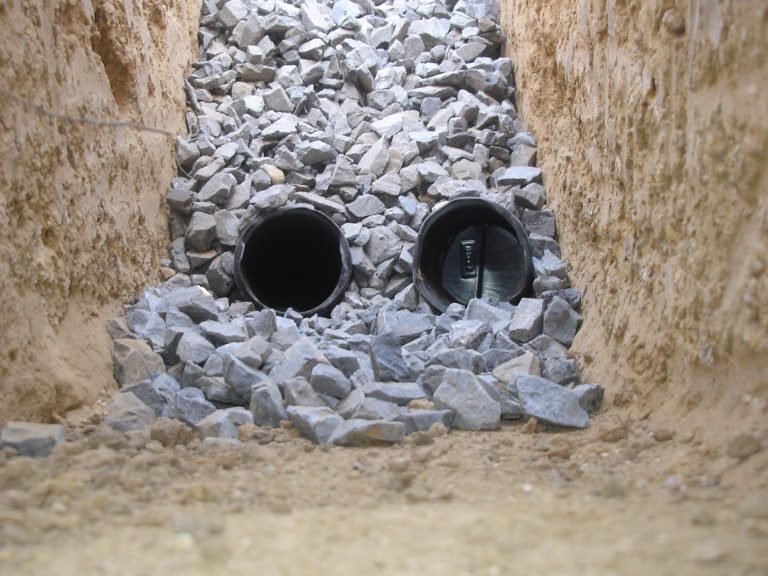
Catch Basins & Channel Drains for Northeast Austin homes
Surface drains are at their best in places where concentrated water meets something you want dry. In Northeast Austin that often means a carport or garage slab on a mid-century house, a side-yard path between two buildings or a back patio where the yard slopes toward the door. A catch basin set in the lowest spot picks up that water, and buried pipe carries it away. A channel drain does the same job across a wider opening. Another good use is a side-yard path. Many Northeast Austin homes have a narrow gap between the house and the neighbor's fence, and rain from two roofs funnels through it. A catch basin at the low point, tied to a pipe to the street, keeps that gap from turning into a stream that undermines the slab edge and rots the fence boards.
Older homes in Windsor Park and similar neighborhoods often have a driveway that runs down to a garage or carport set below the street. That layout turns the driveway into a ramp for rainwater. A channel drain across the entry intercepts the flow before it reaches the slab, and a pipe sends it to the street or a rear outlet. It is one of the quickest ways to keep a low garage dry without rebuilding the driveway. Grate choice looks minor but affects daily life. Ductile iron holds up under cars, stainless resists rust in wet soil and plastic suits foot traffic only. A grate that rocks or sits proud of the pavement is a tripping hazard and gets run over by mowers. Ask for a flush, well-seated grate that matches the load.
Design details matter on a city lot. The grate must be rated for the traffic it carries, the pipe must have enough fall to reach the outlet, and the outlet must be legal. Austin treats public storm inlets and rights of way as city property, so a connection needs approval. Where it is allowed, a through-curb outlet is common. Call 811 before cutting concrete or digging, and keep Texas Water Code section 11.086 in mind so the discharge does not damage a neighbor. Plan the pipe path with sewer laterals, water lines and gas lines in mind, since older lots often have more crossings than expected. An 811 locate shows public lines, and a plumber can help with private ones. Rerouting a drain by a few feet is easy on paper and expensive after the trench is open.
What to know in Northeast Austin
Below-grade garages and carports
Some older homes sit slightly below the street, so any rain on the driveway flows toward the door. A channel drain helps, but the drain's outlet must sit lower than its inlet. If the street is higher than the garage, a sump pump may be needed. A site visit with a level answers the question.
Cutting concrete cleanly
Channel drains require a saw cut and trench in the concrete. Older slabs may be thin or already cracked, so cuts should be planned to avoid spreading damage. Ask how the crew will protect the surrounding concrete and how they will finish the patch so water actually flows into the grate.
Debris from city trees
Streets here have large shade trees that drop leaves, seeds and twigs. A basin with a sump and a removable basket makes cleaning easy. A drain that is plugged during the fall rains does no good, so plan on a quick check after major storms.
Signs you may need catch basins & channel drains
- Water running across a patio or driveway toward a door or garage
- Puddles at the end of a swale or against a fence line
- Mud, sediment, or sand washing across hard surfaces
- An existing drain grate that overflows or stays full
How catch basins & channel drains works
Both devices are only as good as the pipe and outlet behind them. A grate can pass hundreds of gallons a minute in a heavy rain, but if the pipe beneath is undersized, flat, or blocked, water backs up and floods the area the drain was meant to protect. That is why installers size the pipe to the area draining into it, set it on a steady slope, and make sure the discharge point can handle the flow. Typical outlets are the same as for other drains: a lower part of your lot, a pop-up emitter, a dry well, or a municipal connection where one is permitted. Always confirm the outlet is legal and safe before the first shovel hits the soil.
In clay soil, surface drains matter for a simple reason. The Blackland Prairie clay east of I-35 absorbs water slowly, so rain often runs across the surface instead of soaking in. Compacted construction fill around new homes makes this worse, because it behaves almost like pavement when it is wet. That means a patio, a side yard, or the low end of a sloped lawn can collect large volumes of water in minutes. A catch basin or channel drain catches this runoff quickly, before it saturates the soil along the slab, and it can do so without trenching up the whole yard like a long French drain might. Pairing the basin with a corrected slope keeps the water moving into the grate instead of around it.
What to expect on a Northeast Austin visit
- 01
Find the low spots and flow paths
We watch how water moves across your lot during or after rain, marking where it collects, where it crosses hard surfaces, and where it should leave. We also check the existing slope of patios and drives. This tells us whether a basin, a channel drain, or both are the right tools for your yard.
- 02
Size the system to the water
We estimate how much roof, paving, and lawn drains toward each point, then choose a grate size and pipe diameter that can handle it. Four-inch pipe works for many small yards, while larger areas call for six-inch. Sizing too small is the most common reason a drain overflows in a hard rain.
- 03
Call 811 and plan the outlet
Texas law requires a call to 811 at least two business days before digging, not counting weekends and holidays. We then confirm the outlet: a lower part of your lot, a pop-up emitter, a dry well, or an approved street connection. City and HOA rules differ, so we check before any trenching begins.
- 04
Excavate and set the basin or channel
The hole or trench is dug to the depth needed, and the base is leveled on compacted gravel so the unit does not settle. The grate is set slightly below the surrounding grade so water flows into it. Channel drains are set to a gentle slope, and they are anchored with concrete when they sit in a slab.
- 05
Connect solid pipe and add cleanouts
Solid pipe leaves the basin or channel and runs downhill to the outlet, joined with proper fittings and sealed at the connection. Cleanouts are added at turns so the line can be flushed. We run water into the system before backfill to check for leaks, standing water in the pipe, and the speed of flow.
- 06
Backfill, finish, and show you the upkeep
The trench is backfilled in layers, the surface is graded to feed water into the grate, and sod or concrete is restored. We then show you how to remove the grate, check the sump, and clear debris, so you know exactly what a simple spring and fall cleaning looks like. Ask to see it done once.
Our approach in Northeast Austin
- We walk the property in Northeast Austin and trace where water comes from, where it collects and where it can legally go
- We explain what we find in plain language, with photos where they help
- Repairs and installs are planned around Travis County permitting requirements
- You get written options before any repair work begins
- We call 811 to mark buried utilities before any digging
Soil and drainage conditions around Northeast Austin
The terrain is mostly flat to gently rolling, cut by creeks that drain toward the Colorado River to the southeast. Walnut Creek runs through the northern part of the area, and Walnut Creek Metropolitan Park, with its trails, follows it. Gilleland Creek drains part of the northeast side and flows toward Pflugerville. The main routes are US-290 east, which carries traffic out toward Manor, and I-35 on the west side, with SH 130 farther east as the area's toll bypass. Many neighborhoods drain through small tributaries and concrete channels before reaching these creeks. Homes near a creek bank or channel should watch for erosion and for runoff from upstream lots, while homes on high ground often deal with water running across the yard rather than standing in it. Storms there can be sharp, and runoff from busy roads and parking lots reaches the creeks quickly.
Catch Basins & Channel Drains questions from Northeast Austin homeowners
Will a channel drain stop water entering my garage?
It can when sized and placed correctly, with the grate at the threshold and a pipe sloped to a working outlet. If the street is higher and the water volume is large, you may need a sump. A site check measures the slope and flow before you decide. Measure from the threshold to the pavement edge so the channel sits where the water arrives.
What outlets are allowed in Austin?
Common choices include a through-curb opening, a pop-up emitter on your lot or a connection to a rear drainage path. Rules depend on the street, the easements and the city's requirements. Call the City of Austin before cutting a curb or tying into a storm inlet. Ask the city about outlets before you commit to a route, since curb work needs approval.
How often do I clean a catch basin?
Check it after heavy storms and at the end of fall. Lift the grate, scoop out debris and silt and make sure water flows into the pipe. A few minutes of cleaning twice a year is usually enough. Neglected basins fill with silt and stop working. Mark a reminder on the calendar for spring and fall checks.
What is the difference between a catch basin and a channel drain?
A catch basin is a box with a grate that collects water at a single point, like the lowest corner of a yard. A channel drain is a long, narrow trough that catches water along a line, such as across a patio or driveway. Basins suit low spots, and channel drains suit water crossing a hard surface in a wide sheet. Many yards use one of each.
Where does the water from a catch basin go?
It travels through buried solid pipe to an outlet. Common outlets are a lower part of your own lot, a pop-up emitter, a dry well, or a street connection where your city allows it. Texas Water Code Section 11.086 prohibits diverting surface water in a way that damages a neighbor's property, so the outlet must be chosen with care. A site visit confirms the exit before work starts.
Will a channel drain stop water from entering my garage?
Often, yes, when the water runs across the driveway toward the door. A channel drain set across the slab intercepts the flow before it reaches the threshold. It must be sized for the volume of water and connected to a working outlet. If water seeps up through cracks, or the slab slopes strongly toward the door, additional fixes may be needed. A site visit shows which case applies.
More about catch basins & channel drains → · All services in Northeast Austin →
Need catch basins & channel drains in Northeast Austin?
Call or send a request. We will look at where the water goes, check the grade and give you a written estimate.