Elgin · Bastrop County
Catch Basins & Channel Drains in Elgin, TX
Where water collects in a low spot, along a patio or at the bottom of a sloped driveway, a catch basin or channel drain intercepts it and moves it through solid pipe. In Elgin these work well at the low corner of a flat lot and at garage aprons. Grates must stay clear of leaves and mulch, so we place them where you can reach them easily.
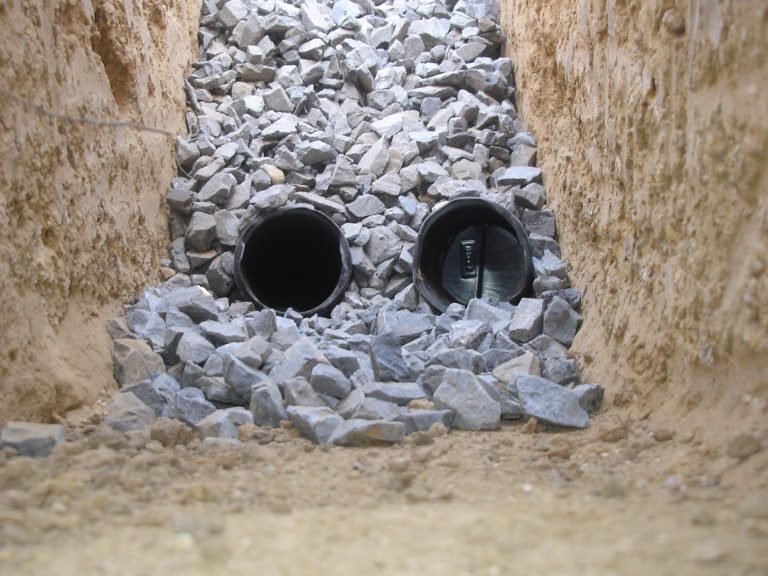
Catch Basins & Channel Drains for Elgin homes
Where water collects in one low spot, a catch basin does the job a French drain cannot. It is a box set flush with the ground that takes in surface water through a grate and passes it into buried pipe. On Elgin lots, the usual candidates are the low corner of a flat back yard, the end of a long gravel or concrete driveway, or the area beside a detached shop or barn where roof runoff and driveway flow meet. Think about what rides over the grate. Lawn mowers, boots, bike tires and the occasional horse trailer in this part of Bastrop County all treat a drain differently. Narrow slot openings are friendlier to heels and wheels, while wider grates pass debris and water faster. A short conversation about who uses the area leads to the right pick.
Channel drains are the long, narrow cousins. They sit across a garage apron, a walkway or a patio edge and catch sheet flow before it enters a door or pools on the slab. Many Elgin properties have a driveway that slopes toward the garage, which is a common reason for the water at the door after a storm. A channel drain at the threshold, tied to solid pipe, stops that water with a short trench and a flush grate. Where a driveway meets a garage slab, the transition is usually only a few inches high. A channel drain set along that line has to be installed at the exact grade of both surfaces, or water simply hops over it. Setting the drain slightly below the slab edge and sloping the apron toward it is the detail that makes it work.
Flat Blackland ground gives these drains very little natural fall, so the pipe elevation and outlet need real measurement. Debris is also a factor. Pecan leaves, mud and gravel from rural driveways fill basins fast, so a basin with a sump and an accessible grate is worth the extra depth. Confirm the discharge point is yours to use, since Texas Water Code section 11.086 limits diverting water onto a neighbor. Check with the City of Elgin or Bastrop County for any ditch rules, and call 811 before digging. Plan the pipe path before picking the grate size. Four-inch solid pipe usually handles a few downspouts and a small yard, but a large paved area needs six-inch pipe. Pipe that is too small backs up in the first heavy storm and floods the very area the drain was meant to protect.
What to know in Elgin
Traffic ratings for grates
A grate beside a walkway is not the same as one under a truck tire. Many Elgin driveways carry trailers, tractors and work trucks. Ask for a load-rated grate, usually heavy-duty cast iron or ductile iron, for any drain that vehicles cross. Look for catch basins with a built-in sump, which collects grit and stops it from entering the pipe.
Silt traps and cleanouts
Gravel drives and bare clay shed a lot of silt. A basin with a few inches of sump below the outlet pipe catches that grit before it clogs the line. Add a cleanout on long runs so you can flush the pipe without digging it up. On bare clay, add a strip of gravel around the grate so mud does not wash straight in.
Depth versus fall
On a flat lot, a basin set too shallow cannot pass water down a gentle pipe slope to the outlet. Marking the finished elevation at the grate and at the outlet before trenching shows whether the run works as drawn or needs a pump. Measure the water depth at the grate during a rain, and size the grate to keep it under an inch or so.
Signs you may need catch basins & channel drains
- Ponding at the bottom of a sloped yard after short storms
- A low spot in the lawn that holds water after every rain
- Water running across a patio or driveway toward a door or garage
- Puddles at the end of a swale or against a fence line
How catch basins & channel drains works
A catch basin is a box, usually plastic or concrete, set into the ground with an open grate on top. Water flows across the lawn, drops through the grate, and falls into the box. A pipe attached near the bottom carries it away. Many basins also have a sump, a few inches of empty space below the outlet pipe, where sand, leaves, and silt settle out instead of traveling down the line and clogging it. Catch basins are the right tool for a single low spot, such as the lowest corner of a back yard, where runoff gathers and has no natural way to leave. They are a point solution rather than a long-line one. Basins usually come in nine, twelve, and eighteen inch sizes, and the grate is chosen to match the amount of water headed its way.
A channel drain, sometimes called a trench drain, does the same job in a long, narrow strip. It is a shallow trough with a grate on top, set flush with the surface so water running across a patio, driveway apron, or garage threshold drops into it before it reaches the house. Channel drains come in widths from a few inches to ten or twelve inches, with plastic or metal grates built for foot traffic or, in heavier-duty versions, vehicle loads. Because they run in a line, they intercept sheet flow across a whole width, which a single basin cannot do. This makes them especially useful where a slab slopes toward a door. Slotted and bar grates differ in how much water they pass, so the grate type matters as much as the trough underneath it.
What to expect on a Elgin visit
- 01
Find the low spots and flow paths
We watch how water moves across your lot during or after rain, marking where it collects, where it crosses hard surfaces, and where it should leave. We also check the existing slope of patios and drives. This tells us whether a basin, a channel drain, or both are the right tools for your yard.
- 02
Size the system to the water
We estimate how much roof, paving, and lawn drains toward each point, then choose a grate size and pipe diameter that can handle it. Four-inch pipe works for many small yards, while larger areas call for six-inch. Sizing too small is the most common reason a drain overflows in a hard rain.
- 03
Call 811 and plan the outlet
Texas law requires a call to 811 at least two business days before digging, not counting weekends and holidays. We then confirm the outlet: a lower part of your lot, a pop-up emitter, a dry well, or an approved street connection. City and HOA rules differ, so we check before any trenching begins.
- 04
Excavate and set the basin or channel
The hole or trench is dug to the depth needed, and the base is leveled on compacted gravel so the unit does not settle. The grate is set slightly below the surrounding grade so water flows into it. Channel drains are set to a gentle slope, and they are anchored with concrete when they sit in a slab.
- 05
Connect solid pipe and add cleanouts
Solid pipe leaves the basin or channel and runs downhill to the outlet, joined with proper fittings and sealed at the connection. Cleanouts are added at turns so the line can be flushed. We run water into the system before backfill to check for leaks, standing water in the pipe, and the speed of flow.
- 06
Backfill, finish, and show you the upkeep
The trench is backfilled in layers, the surface is graded to feed water into the grate, and sod or concrete is restored. We then show you how to remove the grate, check the sump, and clear debris, so you know exactly what a simple spring and fall cleaning looks like. Ask to see it done once.
Our approach in Elgin
- We walk the property in Elgin and trace where water comes from, where it collects and where it can legally go
- We explain what we find in plain language, with photos where they help
- Repairs and installs are planned around Bastrop County permitting requirements
- You get written options before any repair work begins
- We call 811 to mark buried utilities before any digging
Soil and drainage conditions around Elgin
Expect three problems again and again in Elgin. First, soggy yards where the clay refuses to absorb water, which is where French drains, surface swales and dry wells do the most good. Second, downspouts that dump right at the foundation, which feed the same clay that swells and shrinks under the slab. Third, concrete that sinks or heaves, because clay moves with moisture and fill under new slabs compacts unevenly. Foam leveling lifts patios, walks and driveways without tearing them out, and crack and joint sealing keeps surface water from washing under the edges. We do not repair structural foundations. If doors stick, bricks crack or you see stair-step cracks in the walls, have a structural engineer or foundation repair company evaluate the house. Fixing the drainage around it is often part of keeping the repair stable. Dry summers make it worse, because shrunken clay opens cracks that gulp the first rain, then swells shut and sends the rest across the surface. Annual rainfall is roughly in the mid-30 inches.
Catch Basins & Channel Drains questions from Elgin homeowners
What is the difference between a catch basin and a channel drain?
A catch basin is a box that collects water from one spot, like a low corner. A channel drain is a long slot that catches water across a width, like a garage door opening. Both connect to buried pipe. Which fits depends on how the water arrives at your property. Ductile iron grates outlast plastic ones under truck traffic, and stainless resists the rust common in wet clay.
Where should the water go after it is collected?
It should flow by gravity to a lower spot on your own property, a street or ditch you have the right to use, or a pop-up emitter. Never aim it at a neighbor. Ask the City of Elgin or Bastrop County about ditch connections before you finalize the plan. Flush the line with a hose once or twice a year so you know it still runs freely.
How often does a catch basin need cleaning?
Check it after heavy storms and in fall when leaves drop. Remove debris from the grate, and scoop silt from the sump a couple of times a year. A clean basin handles storms well. A neglected one clogs and defeats the purpose of installing it. A cleanout riser at the first bend gives you a way to rod or flush the line without digging.
Are these drains a fix for foundation problems?
They help protect a foundation by removing surface water near the slab, which evens out soil moisture on expansive clay. They do not repair a foundation that has already moved. If you see widening cracks, doors that stick, or uneven floors, a structural engineer or foundation repair company should evaluate the house. Drainage and structural repair are separate jobs. Keep the grate clear.
Do I need city or HOA approval for a new drain?
It depends on where you live and what you are connecting to. Work in a drainage easement, a connection to a street inlet, or a visible change to the yard may need approval. Rules vary by city and HOA, so check with your city or HOA first, and keep any approval in writing for your records. Photos of the planned route help the review.
What is the difference between a catch basin and a channel drain?
A catch basin is a box with a grate that collects water at a single point, like the lowest corner of a yard. A channel drain is a long, narrow trough that catches water along a line, such as across a patio or driveway. Basins suit low spots, and channel drains suit water crossing a hard surface in a wide sheet. Many yards use one of each.
More about catch basins & channel drains → · All services in Elgin →
Need catch basins & channel drains in Elgin?
Call or send a request. We will look at where the water goes, check the grade and give you a written estimate.