Brushy Creek · Williamson County
Underground Downspout Drains in Brushy Creek, TX
On a sloped Brushy Creek lot, a downspout can send a concentrated stream straight toward the foundation or the neighbor below. Buried lines carry roof water to a safe outlet downhill of the house, such as a pop-up emitter in a vegetated area. Outlets are planned so the discharge does not erode the slope. A splash block alone rarely handles a hillside.
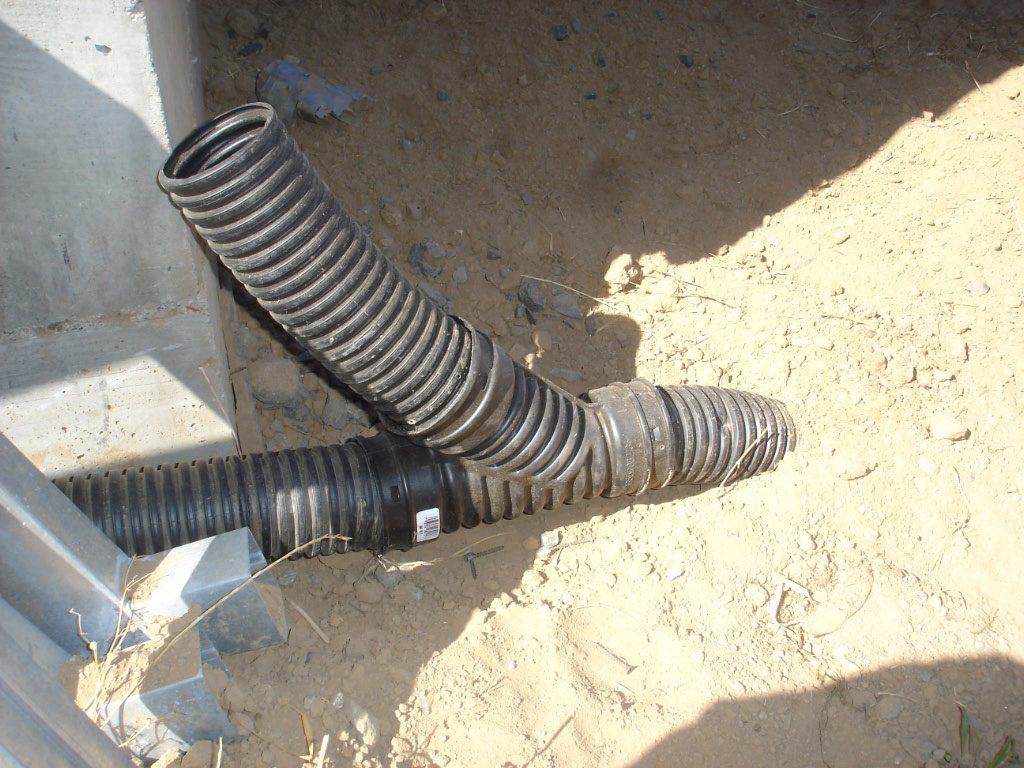
Underground Downspout Drains for Brushy Creek homes
Roof water adds up fast. A one-inch rain on a roof with a 2,000 square foot footprint sheds over 1,200 gallons, and most of it leaves through a few downspouts at the corners of the house. In Brushy Creek, many homes are over thirty years old and still use short plastic splash blocks or elbows that drop water a foot from the foundation. That water soaks into the soil right next to the slab. Underground downspout drains fix that by capturing the water in solid pipe and moving it well away from the house before it comes to the surface again in the yard. Count your downspouts and look at where each one lands. A corner that dumps onto a flower bed or a narrow side yard often does the most harm, since the water has nowhere else to travel.
Pipe material and slope are what make or break these drains. Solid, smooth-wall pipe is standard, because perforated pipe would leak the roof water right back into the soil next to the house. The line needs a steady fall toward its outlet, and the outlet needs room to discharge: a pop-up emitter in the yard, a daylight exit on a slope or a connection to a drain system. In the limestone-based ground here, rock can interrupt the trench, and clay pockets can hold water at the outlet if the ground there is flat. Both are reasons to pick the outlet spot with care and to watch it during the first big storm after installation. Burying the line also hides it, so keep a simple sketch of the route with measurements from fixed points like corners and fences. That sketch will save time and prevent a shovel strike years from now.
Brushy Creek has many mature live oaks and cedar elms, so leaves and seed pods fill gutters and downspout inlets, and roots can reach into pipe joints. Install a strainer or a clean-out at the top of each run, and keep gutters clear in fall. Never tie roof drains into a sanitary sewer line, a septic system or the street without the city's say-so, since many cities limit those connections. If your lot backs up to a greenbelt or the creek corridor, ask the HOA or utility district before running a line to it. The fix works only if the water has a clear, approved place to go. Many Brushy Creek homes have two-story rooflines, so a single downspout can serve a large section of roof. Those corners deserve the largest pipe and the most open outlet on the lot.
What to know in Brushy Creek
Inlet filters and clean-outs
Leaves, shingle grit and acorns collect at the top of every downspout run. A removable strainer and a clean-out fitting let you flush the line without digging. Without them, a clogged pipe backs up into the gutter, which then overflows beside the foundation. That is the very problem the system was meant to prevent, so a few extra fittings at install time are worth having.
Outlet placement matters most
A downspout pipe is only as good as its end. Pop-up emitters need open ground where water can spread, not a flat spot against a fence. Daylight outlets need a stable, rocky or planted exit so water does not cut a gully into the slope. Your outlet should never discharge onto a neighbor's lot, across a sidewalk or onto a shared driveway.
Combine lines only when sized right
Joining several downspouts into one pipe saves trenching but can overload that line in a big storm. A four-inch pipe handles less than many people expect, and a six-inch main may be needed on larger roofs. Matching pipe size and slope to roof area keeps the system working during the heaviest rains rather than only during light ones.
Signs you may need underground downspout drains
- Water streaming along the foundation wall during rain
- Cracked or sunken splash blocks and walkways near the downspout
- Mud, mildew, or dampness along the base of exterior walls
- Gutters that overflow because downspouts back up
How underground downspout drains works
In expansive clay such as the Blackland Prairie soils across Pflugerville, Hutto, Manor, and Taylor, the effect of roof water is especially strong. Clay near a slab swells when wet and shrinks when dry, so uneven moisture around the perimeter can push and pull a foundation in different directions. Roof water adds a heavy, repeated dose of moisture to one spot. Moving it twenty feet away does not eliminate foundation risk by itself, but it removes a major and avoidable source of wetting. It also keeps soil from eroding into a trench beneath the downspout, which is a common spot for settlement and cracked flatwork. Pairing buried pipe with a corrected slope along the wall adds a second layer of protection for the same area.
Underground is not always the right answer, and it helps to know the alternatives. A simple above-ground downspout extension or a hinged extension that flips up for mowing costs very little and works if the yard has enough slope and open space. Buried pipe makes more sense when you have a narrow side yard, a patio or walkway in the path, a mower and kids who trip over extensions, or a flat lot where water needs a defined route. A combination is common: some downspouts go underground while others use a short surface extension to a flower bed or a rain barrel for watering. Seeing how your own lot drains during a real storm is the quickest way to choose between them.
What to expect on a Brushy Creek visit
- 01
Map the gutters and downspouts
We note every downspout, what roof area it serves, and where it lands now. Larger roof sections and valleys concentrate more water, so they get priority. We also check that gutters are clear and well pitched, because clogged gutters spill over the edge and send water to the foundation anyway, even when downspouts are piped away.
- 02
Pick the outlet first
The discharge point drives the whole design, so we choose it before laying out the pipe. We look for a lower part of your lot, an approved connection, a catch basin, or soil that can support a dry well. Rules vary by city and HOA, so any shared lot line, easement, or street connection is checked first.
- 03
Call 811 and lay out the route
Texas law requires a call to 811 at least two business days before digging, excluding weekends and holidays. Public utilities mark their lines at no charge. We paint the pipe route, steer around known irrigation lines and tree roots, and keep the path as straight as possible with gentle bends instead of tight corners.
- 04
Trench and set the pipe on a steady slope
Trenches are usually shallow, deep enough to protect the pipe from mowers, edging tools, and foot traffic. The bottom is graded so the pipe falls at least one-eighth inch per foot, often a quarter inch, so water and debris keep moving. Solid pipe is joined with proper fittings and connected to each downspout.
- 05
Add cleanouts and the outlet fitting
A small cleanout at the base of the downspout and at major turns lets leaves or roof grit be flushed out later. The pipe ends in the chosen outlet, such as a pop-up emitter that opens under flow and closes when dry, or a daylight spout with a rock apron to slow the water and prevent erosion.
- 06
Test with water and restore the lawn
Before we backfill, we run a hose into each downspout connection and watch the outlet and the joints. Any leak is fixed first. Then the trench is filled and compacted in layers, sod is replaced or reseeded, and the area is graded so no new low spot forms above the pipe. We also show you where each cleanout sits.
Our approach in Brushy Creek
- We walk the property in Brushy Creek and trace where water comes from, where it collects and where it can legally go
- We explain what we find in plain language, with photos where they help
- Repairs and installs are planned around Williamson County permitting requirements
- You get written options before any repair work begins
- We call 811 to mark buried utilities before any digging
Soil and drainage conditions around Brushy Creek
Many of the neighborhoods here were built from the 1980s through the 2000s, with newer sections still being added. The area includes a Municipal Utility District named Brushy Creek MUD, which provides utility services to part of the community. Homes are mostly one- and two-story slab-on-grade houses on lots of moderate size. Many have backyards with a gentle slope toward a back fence, a greenbelt or a drainage channel. Homes that are 20 to 30 years old now have settled patios, aged downspout lines and landscaping beds higher than they should be. Newer homes sit on engineered fill that continues to compact. Both kinds of lot can develop low spots where water stays, especially where grading was done years ago and has since shifted. Many yards back onto greenbelts, and fences there sometimes block the flow that was designed into the neighborhood grade, so check before replacing one.
Underground Downspout Drains questions from Brushy Creek homeowners
Are underground downspout drains worth it?
They are if roof water is soaking the soil near your slab or running across a walkway. Moving that water ten feet or more away takes strain off the foundation soils and keeps beds from washing out. They do nothing for groundwater or runoff from the neighbor's yard, so confirm that roof water is your actual problem before you pay for a system.
Where does the water go once it leaves the pipe?
It should end up at a pop-up emitter in the yard, a sloped daylight exit or a drain system built for it. It should not end up on a neighbor's lot, in your sewer cleanout or against your foundation. Check city and HOA rules for any connection to a street curb or a shared swale, because some places limit or ban private tie-ins.
Can I install one myself?
Many handy homeowners can, but the work is trench digging, setting a steady slope and avoiding buried lines. Call 811 at least two working days ahead. If you hit rock, a hard clay layer or a utility, stop and reassess. A line with a dip or low spot will hold water and clog, so check the slope with a level before you backfill the trench.
Can I connect downspouts to a French drain?
In most cases, you should not. A French drain is built to collect groundwater through perforated pipe, and a sudden burst of roof water can overload it or push silt into the gravel. Downspouts should go on their own solid pipe to a separate outlet. Some designs do tie the two systems into one outlet downstream, but that needs careful planning. Ask for the design in writing.
What is a pop-up emitter, and does it work in clay?
A pop-up emitter is a capped fitting at the end of a buried pipe. Water pressure lifts the cap during rain and releases the water onto the lawn, and the cap drops closed afterward. It works well on a lot with enough slope and open space to spread the water. On flat clay, it needs room, since the water may pool nearby.
Do I need to call 811 before digging a downspout trench?
Yes. Texas law requires notice to Texas811 at least two business days before excavation, not counting weekends or holidays, and that applies to homeowners too. Public utilities will mark their lines for free. Private lines, like irrigation or landscape lighting, usually are not marked, so point out anything you know about to the crew. Call early so your start date is not pushed back.
More about underground downspout drains → · All services in Brushy Creek →
Need underground downspout drains in Brushy Creek?
Call or send a request. We will look at where the water goes, check the grade and give you a written estimate.