Manor · Travis County
Underground Downspout Drains in Manor, TX
Roof water is a leading cause of swelling soil beside Manor slabs. Underground downspout drains take gutter water and carry it away to the street, a pop-up emitter or a dry well. Pipe slope matters on flat lots, so we set the fall carefully and flush the line afterward to confirm it runs clear. A garden hose run through the finished line proves it empties before we close the trench.
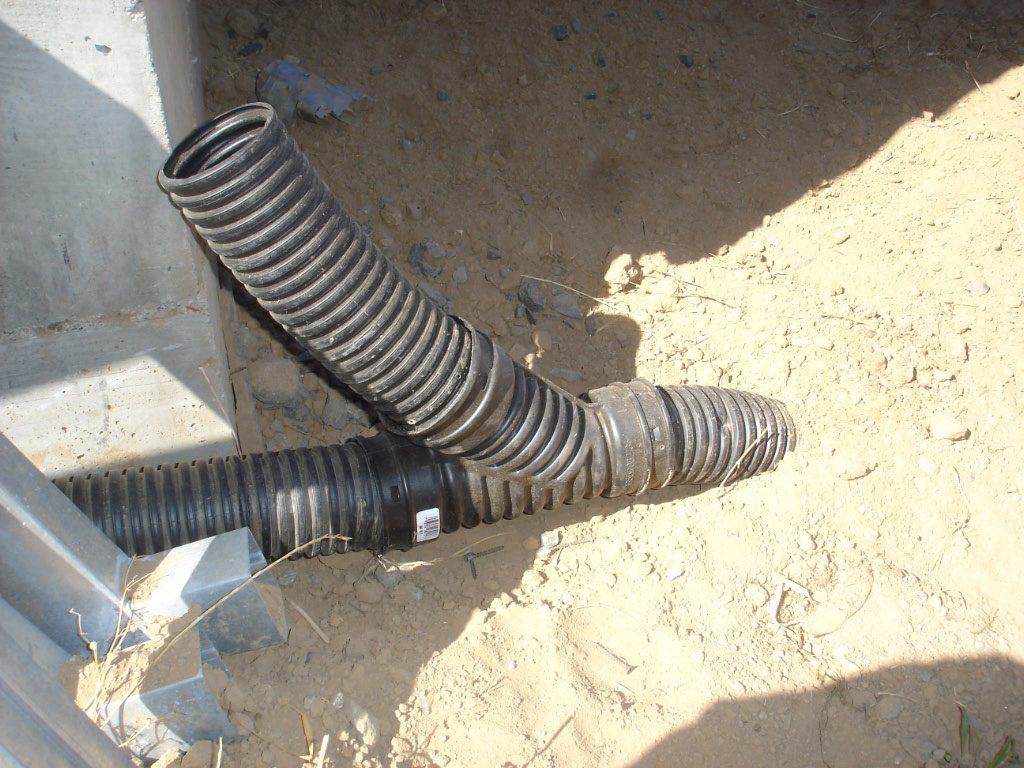
Underground Downspout Drains for Manor homes
A roof sheds a lot of water. A 2,000 square foot roof in Manor can send more than a thousand gallons toward the ground in a one-inch rain, and almost all of it comes off at four or five downspouts. When those downspouts end on the ground beside the house, the water soaks into clay right at the foundation. Underground downspout drains solve that by capturing the water in solid pipe and moving it well away from the house before it has a chance to soak in. Count your downspouts and check where each one ends. Corner downspouts that end at a garage apron or a side yard fence are the most common trouble spots, because that water has no easy path and sits against slab edges.
Most newer Manor homes have downspouts that empty onto small splash blocks, and the backyard slope is gentle. That is a good setup for buried pipe, as long as the line has a place to end. Common exits are the curb in front, a pop-up emitter out in the yard, or a daylight outlet at a lower point. The pipe is solid, not perforated, so water travels all the way to the exit without leaking into the soil near the slab. Perforated pipe is for groundwater, not for roof runoff. If your gutters overflow in heavy rain, the downspout line may be too small or plugged. Four-inch solid pipe is common for residential runs, and larger pipe helps where several downspouts join before the outlet.
Details matter in clay. Pipe should be set in a trench with steady slope and a firm bed, because clay can shift as it dries and rewets. We add cleanouts at bends so you can flush out leaves and roof grit, which are a regular problem when oaks and pecans overhang a roof. Remember to call 811 before digging, and check your HOA about visible emitters or curb cuts. Some Manor HOAs and the city have rules about how and where roof runoff may leave a lot. Finish work matters. Backfill should be tamped in layers, and sod or mulch should return to grade so a low line does not form over the trench. Mark the cleanout lids so you can find them again.
What to know in Manor
Curb outlets need a check
Many Manor streets have curbs, and a pipe through a curb is a common exit. Whether you may cut or core one depends on the city and sometimes the HOA. Ask first. If curb outlets are not allowed, a pop-up emitter further out in the yard is the usual alternative. The City of Manor can tell you if sending roof water to the street is accepted for your lot.
Leaves and shingle grit clog pipes
Newer shingles shed granules for the first few years, and nearby trees add leaves. Both can build up in a buried line. Gutter guards and cleanouts keep the system working. Plan on flushing the pipe with a garden hose once or twice a year, and after any big storm that fills the gutters. Cleanouts with a threaded cap are cheap insurance and let you use a hose to find where a blockage sits.
Pipe should not run uphill
Flat lots leave little margin. A downspout line needs steady fall from the connection to the outlet, and trench depth grows when the lot is level. We check elevations first so the system drains fully instead of holding standing water in the pipe, where it can freeze or breed mosquitoes. An elevation check with a string level before digging often saves hours of rework.
Signs you may need underground downspout drains
- Cracked or sunken splash blocks and walkways near the downspout
- Mud, mildew, or dampness along the base of exterior walls
- Gutters that overflow because downspouts back up
- Soggy lawn directly below a roof valley or downspout
How underground downspout drains works
In expansive clay such as the Blackland Prairie soils across Pflugerville, Hutto, Manor, and Taylor, the effect of roof water is especially strong. Clay near a slab swells when wet and shrinks when dry, so uneven moisture around the perimeter can push and pull a foundation in different directions. Roof water adds a heavy, repeated dose of moisture to one spot. Moving it twenty feet away does not eliminate foundation risk by itself, but it removes a major and avoidable source of wetting. It also keeps soil from eroding into a trench beneath the downspout, which is a common spot for settlement and cracked flatwork. Pairing buried pipe with a corrected slope along the wall adds a second layer of protection for the same area.
Underground is not always the right answer, and it helps to know the alternatives. A simple above-ground downspout extension or a hinged extension that flips up for mowing costs very little and works if the yard has enough slope and open space. Buried pipe makes more sense when you have a narrow side yard, a patio or walkway in the path, a mower and kids who trip over extensions, or a flat lot where water needs a defined route. A combination is common: some downspouts go underground while others use a short surface extension to a flower bed or a rain barrel for watering. Seeing how your own lot drains during a real storm is the quickest way to choose between them.
What to expect on a Manor visit
- 01
Map the gutters and downspouts
We note every downspout, what roof area it serves, and where it lands now. Larger roof sections and valleys concentrate more water, so they get priority. We also check that gutters are clear and well pitched, because clogged gutters spill over the edge and send water to the foundation anyway, even when downspouts are piped away.
- 02
Pick the outlet first
The discharge point drives the whole design, so we choose it before laying out the pipe. We look for a lower part of your lot, an approved connection, a catch basin, or soil that can support a dry well. Rules vary by city and HOA, so any shared lot line, easement, or street connection is checked first.
- 03
Call 811 and lay out the route
Texas law requires a call to 811 at least two business days before digging, excluding weekends and holidays. Public utilities mark their lines at no charge. We paint the pipe route, steer around known irrigation lines and tree roots, and keep the path as straight as possible with gentle bends instead of tight corners.
- 04
Trench and set the pipe on a steady slope
Trenches are usually shallow, deep enough to protect the pipe from mowers, edging tools, and foot traffic. The bottom is graded so the pipe falls at least one-eighth inch per foot, often a quarter inch, so water and debris keep moving. Solid pipe is joined with proper fittings and connected to each downspout.
- 05
Add cleanouts and the outlet fitting
A small cleanout at the base of the downspout and at major turns lets leaves or roof grit be flushed out later. The pipe ends in the chosen outlet, such as a pop-up emitter that opens under flow and closes when dry, or a daylight spout with a rock apron to slow the water and prevent erosion.
- 06
Test with water and restore the lawn
Before we backfill, we run a hose into each downspout connection and watch the outlet and the joints. Any leak is fixed first. Then the trench is filled and compacted in layers, sod is replaced or reseeded, and the area is graded so no new low spot forms above the pipe. We also show you where each cleanout sits.
Our approach in Manor
- We walk the property in Manor and trace where water comes from, where it collects and where it can legally go
- We explain what we find in plain language, with photos where they help
- Repairs and installs are planned around Travis County permitting requirements
- You get written options before any repair work begins
- We call 811 to mark buried utilities before any digging
Soil and drainage conditions around Manor
Local rules matter. Many Manor neighborhoods have HOAs with approval processes, and some lots sit on recorded drainage easements where changes may need city review. We cannot state the City of Manor's grading and permit requirements, so contact the city and your HOA before you start. Texas Water Code Section 11.086 makes it unlawful to divert or impound natural surface water so that it damages a neighbor's property, so your drain outlet should go to the street, a proper swale or an approved point. If a dispute develops, see an attorney. Texas law also requires everyone, homeowners included, to contact Texas811 at least two business days before digging. With gas, water, electric and fiber lines being added as Manor grows, that call is worth making every time. Keep your approval letters and 811 ticket number together in one folder so you can show them if a neighbor or the city asks.
Underground Downspout Drains questions from Manor homeowners
Are underground downspout drains worth it in Manor?
They are worth considering if downspouts dump near the slab or water pools beside the house. Clay holds that water against the foundation. Burying the discharge and sending it ten or more feet away is one of the simplest ways to cut the moisture load around your home. The goal is at least ten feet of separation, and more where the lot allows it.
Where does water from buried downspouts go?
It leaves through a pop-up emitter, a curb outlet, a storm inlet where allowed, or a lower area of the yard. It should never end at a neighbor's fence or at a spot where it will puddle against someone else's property. Your city or HOA can tell you which outlets are allowed. If a neighbor notices increased water at the property line after your project, address it quickly.
Can downspouts tie into French drain pipe?
Usually it is better not to. Roof water arrives fast, and perforated pipe can leak it back into the soil near the house. Solid pipe for downspouts and perforated pipe for groundwater keeps each job working as intended. If you need both, they can share one outlet downstream. Separate lines are also easier to clean, since each one has only one kind of debris to flush.
Do I need to call 811 before digging a downspout trench?
Yes. Texas law requires notice to Texas811 at least two business days before excavation, not counting weekends or holidays, and that applies to homeowners too. Public utilities will mark their lines for free. Private lines, like irrigation or landscape lighting, usually are not marked, so point out anything you know about to the crew. Call early so your start date is not pushed back.
Will buried downspout pipe clog with leaves or roof grit?
It can, especially under oak or pecan trees. Gutter guards or leaf screens reduce what enters the pipe. A cleanout at the base of the downspout lets you flush the line with a hose, and a pop-up emitter that is sealed or caged will not let animals nest inside. A yearly check of the outlet after leaf season keeps flow steady.
Does moving downspout water help my foundation?
It helps by removing a large, repeated source of moisture near the slab. On expansive clay, steady moisture around the perimeter matters. It is not a structural repair. If you notice widening cracks, doors that stick, or gaps around trim, have a structural engineer or foundation repair company evaluate the house in addition to fixing the drainage. Both jobs matter, and they are separate.
More about underground downspout drains → · All services in Manor →
Need underground downspout drains in Manor?
Call or send a request. We will look at where the water goes, check the grade and give you a written estimate.