Pflugerville · Travis County
Underground Downspout Drains in Pflugerville, TX
Roof water is a major source of soggy ground next to Pflugerville slabs. Underground downspout drains collect gutter water and pipe it away, usually to a pop-up emitter, the street curb or a rain garden. On clay this matters more, because water dumped at the foundation swells the soil and pushes on the slab. We size and slope the pipe so it moves water on its own. Corner and side-yard downspouts are the usual trouble spots because they often share one narrow strip with a fence.
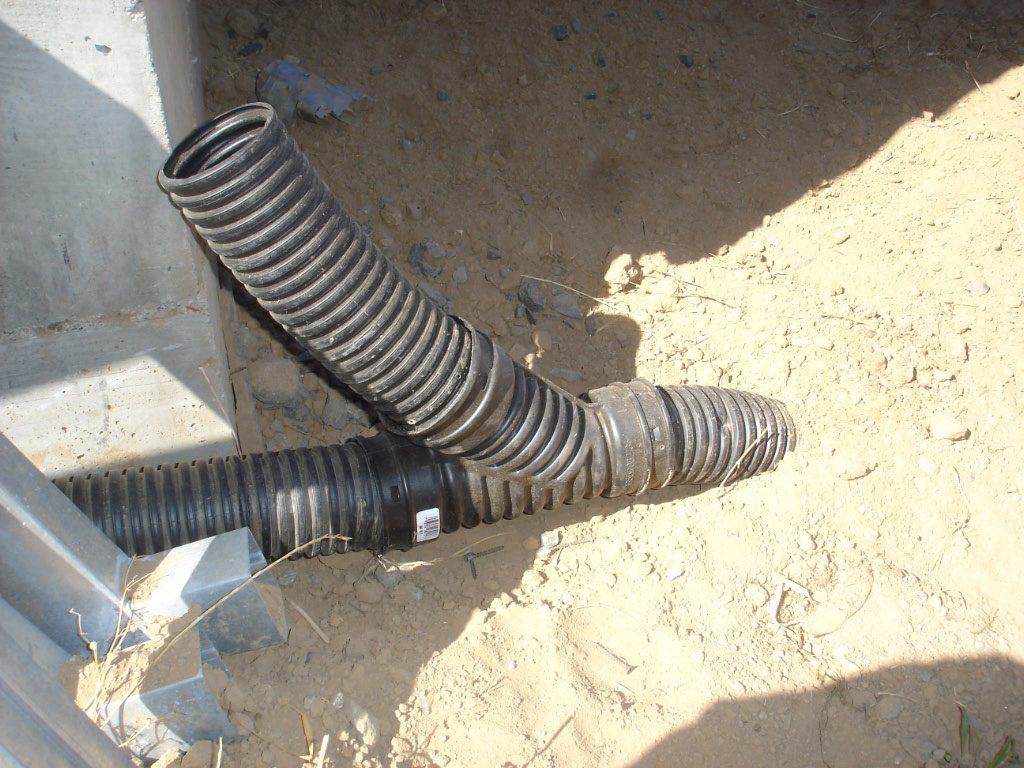
Underground Downspout Drains for Pflugerville homes
A roof sheds a lot of water in a hurry. One inch of rain on a 2,000 square foot roof produces roughly 1,200 gallons, and in most Pflugerville yards the downspouts drop that straight onto clay beside the foundation. Underground downspout drains solve the problem by catching the flow at the bottom of each spout and carrying it away in solid pipe, typically 4 inch corrugated or smooth PVC buried a few inches below the surface. The pipe ends at a pop-up emitter, a curb outlet or a storm inlet. The result is a dry strip of soil along the slab where the clay stays steady instead of swelling and shrinking. The yard stays easier to mow, and the strip beside the slab stays clear of the muddy splash that stains brick and siding.
Older Pflugerville homes near Pecan Street and the original townsite often have short splash blocks and settled gutters, while newer subdivisions east of SH 130 usually have flat lots with little room to run water. That changes the design. On a flat lot the pipe needs at least a slight, steady slope, so a long run may need a deeper trench at the start or a different exit. When the yard offers no daylight exit at all, the line can feed a catch basin, a street curb outlet or a dry well. Each route needs a place to go that the city or HOA allows. Corrugated pipe is cheaper but traps silt in its ribs, while smooth-wall pipe flushes cleaner. Either way, a steady slope of about one percent keeps water moving, which on flat lots may mean a deeper trench at the starting end.
Before burying any line, clean and check the gutters. A downspout drain will carry leaves into the pipe and clog it, so screens or a debris catch at the connection help. Pull the sod for the trench in strips so it can be laid back down, and keep the pipe clear of tree roots and irrigation lines. Mark where the line runs on a sketch. Call 811 at least two business days before digging, since utility lines in Pflugerville often run close to the front of the house. Test with a garden hose at each spout before the trench is closed. Re-check the line after the first big storm. Soil settles over a fresh trench, and a small dip can hold water and silt that you can fix early with a little fill.
What to know in Pflugerville
Count the spouts and the roof area
Each downspout drains a share of the roof. A large back section on one spout can overwhelm a 4 inch pipe in a heavy storm. Splitting that flow between two spouts, or upsizing the pipe, keeps the line from backing up at the elbow and spilling near the slab.
Choose the exit that fits your lot
A pop-up emitter needs lawn to spread the water without eroding it. A curb outlet needs a clear path through the street side. Check with the city before connecting to anything public, and ask your HOA about visible emitters in the front yard.
Keep it separate from other lines
Do not tie downspouts into the sewer cleanout or the yard's irrigation lines. Roof water can overload the sewer and cause backups. Keep the drain as its own system, with accessible cleanouts so a leaf jam can be cleared without digging.
Signs you may need underground downspout drains
- Downspouts that end right next to the foundation
- A trench of eroded soil or exposed gravel under a downspout
- Water streaming along the foundation wall during rain
- Cracked or sunken splash blocks and walkways near the downspout
How underground downspout drains works
A roof collects far more water than most people picture. As a rough rule, one inch of rain falling on 1,000 square feet of roof produces about 600 gallons of water. A typical single-story home in the Pflugerville area may have well over 2,000 square feet of roof, so a one-inch storm sends more than a thousand gallons down the gutters in a short time. All of it exits through a few downspouts. If those downspouts simply spill onto the ground beside the slab, that water soaks the soil right where the foundation needs steady, even moisture, and it often runs along the wall or across the lawn toward your neighbor. Multiply that by every storm in a wet spring and the soil beside the slab rarely gets a chance to dry out.
An underground downspout drain fixes that by catching the water at the bottom of each downspout and sending it through buried pipe. The setup usually starts with a downspout adapter that connects to solid, non-perforated pipe, often four-inch PVC or corrugated pipe with a smooth interior. The pipe is buried in a shallow trench with a steady downhill slope. It runs ten to thirty feet or more from the house, and then it ends at a pop-up emitter, a daylight outlet at a lower part of the lot, a catch basin, a dry well, or a connection to a storm system where the city allows it. Cleanouts at the base of each downspout let you flush leaves out later, and a grate or screen keeps debris from entering the line in the first place.
What to expect on a Pflugerville visit
- 01
Map the gutters and downspouts
We note every downspout, what roof area it serves, and where it lands now. Larger roof sections and valleys concentrate more water, so they get priority. We also check that gutters are clear and well pitched, because clogged gutters spill over the edge and send water to the foundation anyway, even when downspouts are piped away.
- 02
Pick the outlet first
The discharge point drives the whole design, so we choose it before laying out the pipe. We look for a lower part of your lot, an approved connection, a catch basin, or soil that can support a dry well. Rules vary by city and HOA, so any shared lot line, easement, or street connection is checked first.
- 03
Call 811 and lay out the route
Texas law requires a call to 811 at least two business days before digging, excluding weekends and holidays. Public utilities mark their lines at no charge. We paint the pipe route, steer around known irrigation lines and tree roots, and keep the path as straight as possible with gentle bends instead of tight corners.
- 04
Trench and set the pipe on a steady slope
Trenches are usually shallow, deep enough to protect the pipe from mowers, edging tools, and foot traffic. The bottom is graded so the pipe falls at least one-eighth inch per foot, often a quarter inch, so water and debris keep moving. Solid pipe is joined with proper fittings and connected to each downspout.
- 05
Add cleanouts and the outlet fitting
A small cleanout at the base of the downspout and at major turns lets leaves or roof grit be flushed out later. The pipe ends in the chosen outlet, such as a pop-up emitter that opens under flow and closes when dry, or a daylight spout with a rock apron to slow the water and prevent erosion.
- 06
Test with water and restore the lawn
Before we backfill, we run a hose into each downspout connection and watch the outlet and the joints. Any leak is fixed first. Then the trench is filled and compacted in layers, sod is replaced or reseeded, and the area is graded so no new low spot forms above the pipe. We also show you where each cleanout sits.
Our approach in Pflugerville
- We walk the property in Pflugerville and trace where water comes from, where it collects and where it can legally go
- We explain what we find in plain language, with photos where they help
- Repairs and installs are planned around Travis County permitting requirements
- You get written options before any repair work begins
- We call 811 to mark buried utilities before any digging
Soil and drainage conditions around Pflugerville
Water moves through Pflugerville along a handful of named creeks. Gilleland Creek begins northwest of town and runs about 27 miles to the Colorado River, and it was named for James Gilleland, an early settler. Wilbarger Creek rises north of town and drains east toward Bastrop County. Lake Pflugerville, the city's man-made lake, sits in the larger drainage network, and the city has built trails along the creek corridors. The terrain is gently rolling rather than steep, which sounds harmless until you remember that a few inches of fall across a whole subdivision sends sheet flow across many back yards before it reaches a ditch. Homes on the low side of a street, or backing onto a greenbelt or drainage easement, often receive the water that came off five or six lots uphill. Knowing which way your lot drains, and who is upstream, is the first real step in any fix. A fence line or raised bed can be enough to dam that sheet flow against a back wall.
Underground Downspout Drains questions from Pflugerville homeowners
How far from the house should a downspout drain discharge?
As a rule of thumb, several feet at minimum, and farther is better if the lot allows. On clay, water released near the slab tends to creep back toward the foundation. The exit should also sit on ground that slopes away from your house and away from your neighbor's yard. Check the exit during a storm to confirm the flow lands on grass and moves away from both homes.
Will underground downspout pipes freeze or clog in Pflugerville?
Freezing is rare and brief here, and a sloped line drains itself between storms. Clogs from leaves, shingle grit and mud are the usual trouble. Gutter screens, a catch at the connection and a cleanout at the pipe's high end make it easy to flush the line once a year. Flushing with a garden hose also shows whether the line is moving water freely.
Can I connect my downspout drain to a storm drain on the street?
Only if the city allows it and the connection is built to its standards. Some curb outlets are fine, while tying into a public inlet or pipe usually needs approval. Ask the City of Pflugerville before you plan a route, and confirm with your HOA if the exit is visible from the street. A written okay from the city is worth keeping with your home records.
How far from the house should downspout water be sent?
A common recommendation is at least four to six feet, and ten feet or more is better on clay soils that stay wet for a long time. Buried pipe makes longer distances practical. The right distance also depends on your lot size and slope, since the water needs a legal, safe place to land and cannot simply be pushed onto a neighbor.
Can I connect downspouts to a French drain?
In most cases, you should not. A French drain is built to collect groundwater through perforated pipe, and a sudden burst of roof water can overload it or push silt into the gravel. Downspouts should go on their own solid pipe to a separate outlet. Some designs do tie the two systems into one outlet downstream, but that needs careful planning. Ask for the design in writing.
What is a pop-up emitter, and does it work in clay?
A pop-up emitter is a capped fitting at the end of a buried pipe. Water pressure lifts the cap during rain and releases the water onto the lawn, and the cap drops closed afterward. It works well on a lot with enough slope and open space to spread the water. On flat clay, it needs room, since the water may pool nearby.
More about underground downspout drains → · All services in Pflugerville →
Need underground downspout drains in Pflugerville?
Call or send a request. We will look at where the water goes, check the grade and give you a written estimate.