Georgetown · Williamson County
Driveway & Sidewalk Leveling in Georgetown, TX
Driveways on hillsides can shift as water runs under them, and sidewalks near trees can lift or drop. Leveling raises sunken panels back to grade and reduces trip hazards without a full replacement. We check how water reaches the slab, and whether a nearby downspout or slope is the cause. We check the joints between panels for open gaps. Hillside driveways get a slope check too.
Driveway & Sidewalk Leveling for Georgetown homes
Georgetown driveways often sit on slopes, and that raises its own problems. When the base washes out at the low end, panels near the street or the garage drop. On the east side, flatter clay lots see panels tilt as the soil dries and swells. The signs are the same: a step between panels, a gap at the joint, water pooling on the surface, or a drive that now slopes toward the garage. Driveway and sidewalk leveling lifts those panels and fills the voids beneath them. On a sloped drive, the lowest panel often takes the most abuse because it collects both rain and the weight of cars braking on the way down. Look there first for settling, gaps and stains from water that has been seeping underneath.
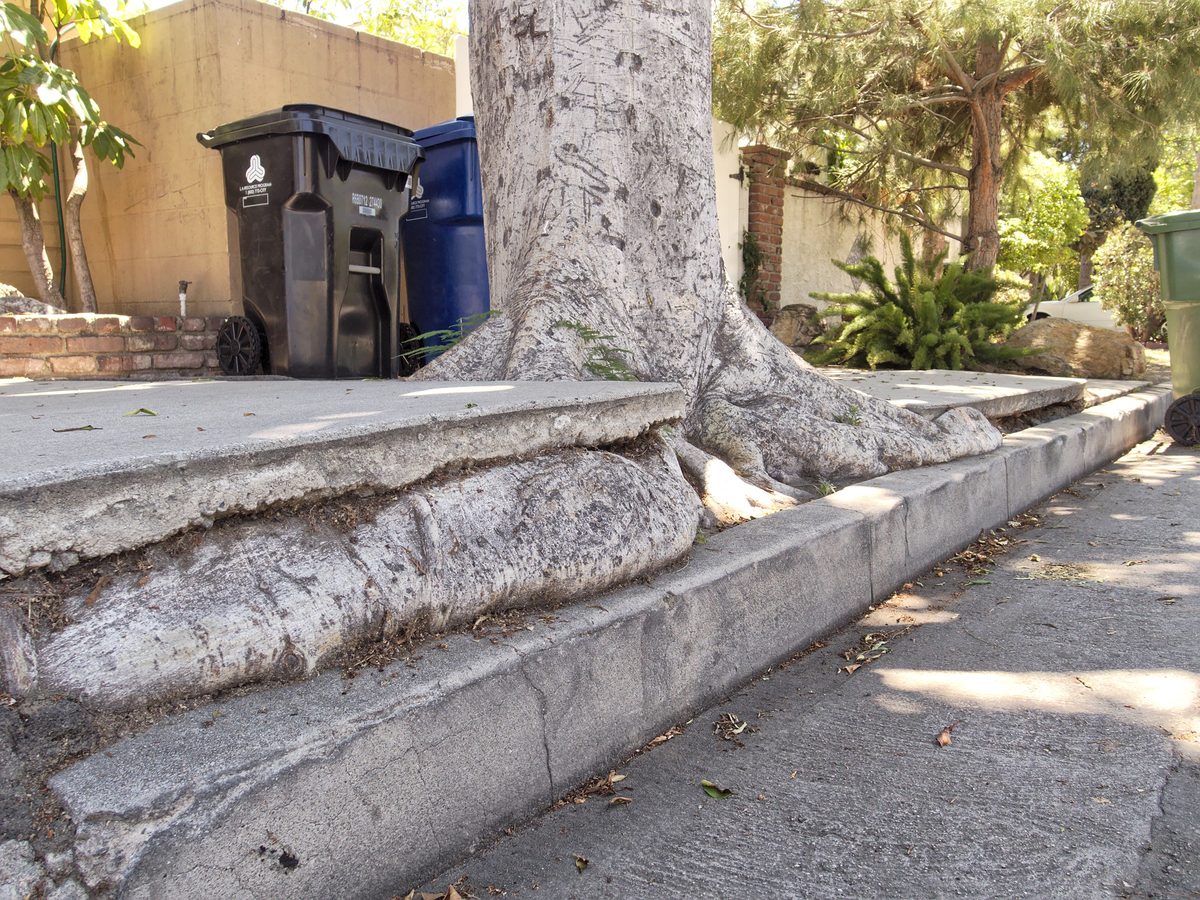
Sidewalks matter in Georgetown, especially around the Square and the older streets where tree roots and decades of weather have lifted slabs. A raised edge of three-quarters of an inch can trip a visitor. Leveling lifts the low panel back to meet the high one, which is often cheaper than replacing the walk. For roots, though, lifting may not hold if the tree keeps growing, so the plan should consider the tree's long-term effect on the slab. Leveling is quick compared with a tear-out. Most residential jobs finish in a day, and the driveway is usually back in use soon after. Replacement means demolition, hauling, forming and curing, which takes much longer. Photograph the walk now, and measure each step height with a ruler, so you can report it to the city if the panel is public.
City sidewalks and curb areas are often the city's or the HOA's responsibility, so ask before you pay. On your own driveway, watch for water sources. Roof runoff, a cracked apron, or a slope that sends street water under the slab all feed the problem. Fixing those makes the leveling last. Plan for vehicles too, since boats, RVs and work trucks add load that the new fill must carry. Tell the crew what parks on your drive. We also look at the joints between panels. Open joints let water in, and once water reaches the base the next heavy rain can wash out more soil. Sealing joints after leveling is a smart follow-up step. A walk with the crew before the job helps agree on which panels will be lifted and which need a different repair.
What to know in Georgetown
Tree roots and sidewalks
Georgetown has many mature trees, and roots can lift sidewalks and driveway edges. Leveling can fix the step, but a growing root can lift the slab again. Talk to an arborist about root pruning, and avoid cutting major roots without advice, since that can harm the tree. Photograph the offsets before work and after, since it shows what changed.
Steep drives and wash-out
On sloped driveways, water running down the surface can find the joints and wash out soil beneath the lower panels. Sealing joints and adding a channel drain at the top or bottom of the slope reduces the flow. Without that, even a leveled drive can sink again. Ask your contractor how many holes will be drilled and where, so you can plan around them.
Who owns the sidewalk
In many Georgetown neighborhoods the sidewalk is in the public right of way. Some cities repair lifted panels or share costs. Others hold owners responsible. Check with the City of Georgetown and your HOA before you hire anyone for a sidewalk in front of your home. Mark sprinkler lines and lights near the drive before any drilling.
Signs you may need driveway & sidewalk leveling
- Hollow sound when tapping a panel
- Cracks that follow a joint where one side sank
- Scraping at the bottom of the car or trash can wheels catching
- A raised or sunken lip between driveway panels
How driveway & sidewalk leveling works
Sidewalks bring a few extra rules. In many Texas cities, public sidewalks in the right-of-way are handled by the city or by the homeowner depending on local ordinance, and trip hazards can be a liability concern. Check with your city before touching a public sidewalk. For sidewalks inside your property, the choice is yours, though an HOA may still have a say. Curb aprons and driveway approaches are in the city right-of-way in many places. Work there may need a permit. Rather than guess, call your city public works office and ask what applies at your address. That one call can save a repair from being torn out later. Homeowners sometimes assume the city will fix a sidewalk heave caused by a street tree, and sometimes it will, so a quick phone call is worthwhile. Written confirmation of who pays is helpful.
A few things you can check yourself. Walk the driveway after a rain and note where water stands. Slide a yardstick across a joint to see how big the step is. Look for gaps between the slab and the soil edge. Take photos before and after storms. Having those details helps a contractor tell you whether leveling, drainage work, or full replacement is the realistic answer. Before any drilling, a call to 811 two business days ahead is required in Texas. Driveways often have irrigation, electric and communication lines nearby. We never drill without that notice. A simple log of dates, rainfall and panel heights makes the history clear. Checking after the first heavy rain following a repair is a good habit, since any new movement shows up early.
What to expect on a Georgetown visit
- 01
Survey the panels and joints
We walk the driveway or sidewalk and measure each step with a straightedge. Cracks, joint gaps and surface wear are noted. We also look at the roofline, irrigation heads and trees to find what is feeding the problem. A short list of the worst panels is written down, along with photos, so you can compare before and after.
- 02
Choose the lift approach
Depending on slab thickness, weight and the lift needed, we discuss foam or mudjacking and recommend the better match. For thin or heavily cracked panels we explain the risk of breakage and when replacement may be wiser. We also look at slab edges for spalling, since crumbling edges can break away when injection pressure rises.
- 03
Call 811 and mark holes
Texas811 gets the notice at least two business days before drilling. Meanwhile, we mark a hole pattern on each sunken panel so lift is spread evenly and nothing is drilled near known lines or reinforcing steel. Holes are generally set in a grid across the sunken panel, with extra points near edges where panels hinge downward.
- 04
Drill and inject gradually
Holes are drilled through the panel, and material is injected in small amounts. We track the rise with levels and string lines, moving between holes so the panel lifts flat instead of tipping. Foam is metered slowly, and if a panel starts to crack or rock, we stop and talk through whether to continue.
- 05
Match adjacent panels
Each panel is raised to meet its neighbors, with attention to drainage direction. A driveway has to shed water away from the garage, so we confirm the final slope instead of just closing the gap. We test drainage with water and check the apron by the garage door, where even a small reverse slope can send water inside.
- 06
Patch holes and set the cure window
Holes are patched, and the surface is cleaned. We explain how long to keep vehicles off the panels and which water source to fix so the repair stays level. Keep cars, trailers and delivery trucks off the repaired panels until we tell you the cure window has passed. A quick walk-through at the end confirms nothing was missed.
Our approach in Georgetown
- We walk the property in Georgetown and trace where water comes from, where it collects and where it can legally go
- We explain what we find in plain language, with photos where they help
- Repairs and installs are planned around Williamson County permitting requirements
- You get written options before any repair work begins
- We call 811 to mark buried utilities before any digging
Soil and drainage conditions around Georgetown
The San Gabriel River is the defining water feature. Two dams on the river created Lake Georgetown and Granger Lake. Before those dams, periodic large but short floods shaped the river bottoms east of town, which are now wooded with oak and pecan. Smaller creeks and draws feed the river, and many neighborhoods have drainage channels or greenbelts running between lots. Terrain is hilly on the western side, so water moves quickly downslope and can cut channels through beds and gravel, wash out mulch and push soil toward the street. On the flatter east side, runoff spreads out and slows. We study the slope of your lot, and the lots above it, before suggesting any fix. Lake Georgetown sits on the North Fork of the San Gabriel River west of town, and the city's creeks and draws feed the river system below it, so a lot near a draw may carry fast water after a storm.
Driveway & Sidewalk Leveling questions from Georgetown homeowners
Can leveling fix a driveway that slopes toward my garage?
Often yes, when the cause is a sunken panel. Raising the panel can restore the slope toward the street. If the drive was poured that way, leveling will not change it, and a channel drain at the garage door may be the better fix. A level and a tape measure help tell the difference. Trip hazards are best fixed soon, especially if elderly neighbors or children use the walk.
How do I know if a sidewalk panel should be lifted or replaced?
If the concrete is solid and only the height is off, lifting works well. If it is crumbling, broken into pieces or the base is gone, replacement is better. Offsets over about an inch or panels that rock underfoot are common candidates for leveling when the slab itself is sound. Ask for a scope that covers each panel by number, which helps compare quotes.
Will tree roots ruin a leveled sidewalk?
They can, if the root keeps growing under the slab. Leveling fixes the current offset but does not stop root growth. Ask an arborist about options before you invest. Sometimes a section of walk can be re-poured with a gentle ramp over the root instead. Joint sealing right after leveling helps the repair last longer. Roots that have grown into the slab edge may need an arborist's advice, because cutting a major root can harm an old oak.
What is the difference between foam and mudjacking for a driveway?
Mudjacking uses a heavy cement slurry and larger holes with a longer set time. Foam is a light expanding polyurethane with smaller holes and fast curing. Foam resists washout, but costs more. Both work only on exterior slabs, not on the house foundation. Ask for the hole size in writing on your quote, since that is the plain difference you will see on the surface afterward.
Will leveling fix a cracked driveway?
It fixes height differences, not cracks. A crack that formed because a panel sank may stop growing once the panel is lifted, but the crack remains. Sealing it afterward keeps water out of the base. See our crack and joint sealing service for that step. Ask how and when the cracks will be sealed, since that step protects the base from rain after the lift.
Can you level the garage floor or the house slab?
Garage aprons and exterior slabs can be leveled. The structural slab of the house, including a garage floor that is part of the foundation, is outside our scope. If you see movement there, a structural engineer or foundation repair company should evaluate it. A foundation contractor can also tell you if the garage slab is tied to the house structure, which affects what can be lifted.
More about driveway & sidewalk leveling → · All services in Georgetown →
Need driveway & sidewalk leveling in Georgetown?
Call or send a request. We will look at where the water goes, check the grade and give you a written estimate.