Round Rock · Williamson County
Dry Wells & Pop-Up Emitters in Round Rock, TX
A dry well stores roof or yard water and lets it seep out slowly. In clay, seepage is slow, so we size the pit generously and add an overflow. In rockier western soil, water may drain faster, but we still check that it will not run toward a neighbor. A pop-up emitter is a simpler option on lots with room. Lots with a high water table or rock close to the surface may suit a different outlet, which we explain on site.
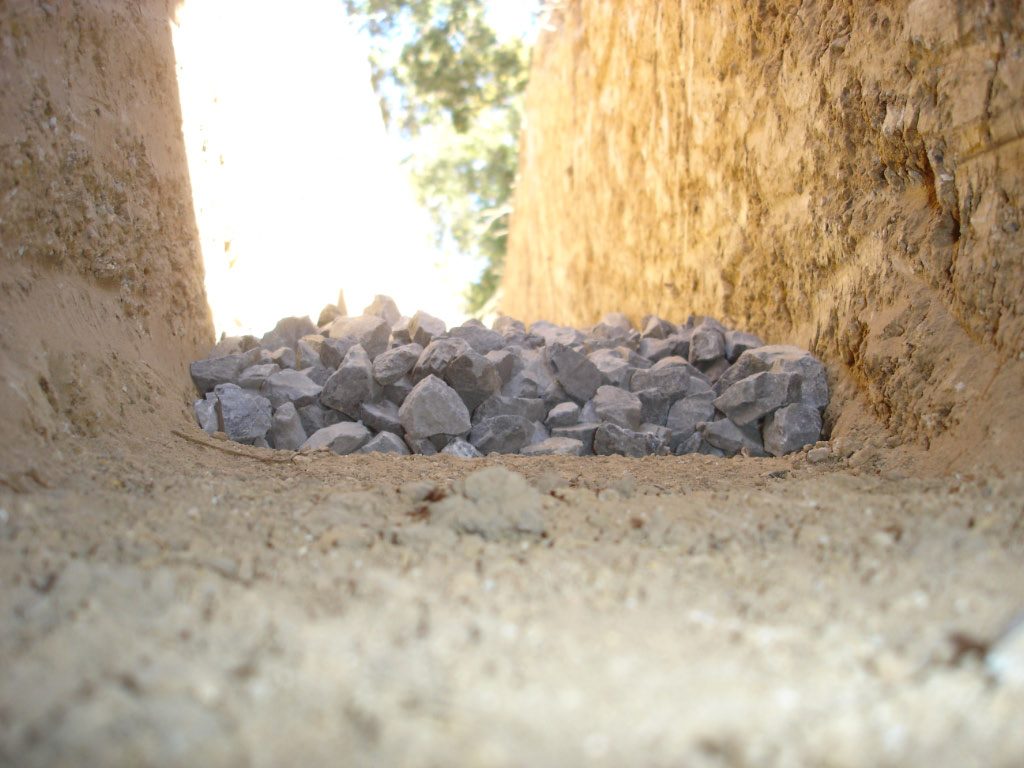
Dry Wells & Pop-Up Emitters for Round Rock homes
A dry well stores runoff underground and lets it seep out gradually. Whether that works depends on what is below your lawn, and in Round Rock the answer changes across town. East of I-35, Blackland clay is slowly permeable, so a dry well fills and empties slowly, and it needs plenty of storage and an overflow. West of I-35, thin soil sits over limestone with fractures that can take water faster, but that same geology raises questions. Parts of the Round Rock area sit over the Edwards Aquifer recharge zone, according to state environmental filings, and rules about putting runoff into the ground there can be stricter. A good result in the top foot of soil is no guarantee, since a dense clay or rock layer can sit a few feet down and stop the water cold, so the probe should go deeper than the planned pit.
That makes the first step a call, not a shovel. Ask the City of Round Rock whether your lot sits in a recharge or contributing zone, and whether a dry well is allowed. If it is, a soak test shows how fast the ground drains. Dig a hole, fill it with water and time the drop. A clay lot may drain in days, and a rocky lot may drain in minutes. Rock can also hide voids, so a contractor should probe the area first. The design includes washed stone, filter fabric, an inlet pipe and an overflow route, and sits well away from the foundation. Voids and fractures in limestone can also carry water quickly to places you did not intend, so keep the well away from foundations and neighbors.
Pop-up emitters are the simpler alternative when a dry well is not suitable. A buried pipe carries roof or yard water to a capped fitting in the lawn, which opens under flow and spreads water onto grass. They suit lots with room to run, and they avoid putting concentrated water into the ground. Keep emitters away from fences, slabs and the neighbor's property line, and check with your HOA about visible fixtures. Call 811 at least two business days before any digging, and keep a sketch of where the chamber and pipes sit. Label the cover or mark the spot on your site sketch, because a buried chamber is easy to forget and easy to damage with a later project.
What to know in Round Rock
Ask about the recharge zone
Some Round Rock properties lie over the Edwards Aquifer recharge zone, where state and local rules protect groundwater. Sending runoff into the ground there may have conditions. Ask the City of Round Rock if your address is affected before designing a dry well. State and city staff can point you to current rules.
Test the soil, not the map
Soil maps give a general picture, but a soak test tells you what your lot does. A hole that drains in minutes suggests rock fractures, and one that holds water for days suggests clay. Each calls for a different size and a different overflow plan. A bucket test is a rough guide, not a design.
Overflow is not optional
Even a well-designed dry well fills in a big storm. The overflow pipe sends excess to a lawn, a swale or a curb outlet before water backs up into the gutters. Plan where that excess lands so it does not damage your yard or your neighbor's. Inspect overflow routes after storms.
Signs you may need dry wells & pop-up emitters
- Water pooling at the end of a pipe or splash block
- Eroded soil or a washed-out patch where a pipe discharges
- An existing dry well or pit that stays full for days after rain
- Gurgling, backed-up drains or downspouts during storms
How dry wells & pop-up emitters works
A pop-up emitter works very differently. It is a small fitting, often with a hinged or spring-loaded cap, sitting flush with the lawn at the end of a buried pipe. When water flows through the pipe, pressure pushes the cap open and the water spills onto the surface. When the flow stops, the cap drops back and closes, which keeps out mowers, insects, and small animals. An emitter does not store anything, and it does not rely on soil absorption. Its job is to release water over a wide patch of lawn, which spreads the flow out and reduces erosion compared with a bare pipe end. It needs a slope that carries the water away from the house. Emitters are also easy to inspect, since you can see them and lift the cap to check for debris.
The soil is the deciding factor, and here is where honesty matters. Dry wells depend on soil that drains. Sandy and gravelly soils accept water quickly, and a dry well works well in them. Heavy clay, such as the Houston Black soils of the Blackland Prairie east of I-35, absorbs water very slowly, because the particles are tiny and the soil swells shut when wet. A dry well in tight clay can fill and stay full for days, which defeats its purpose. Before one is recommended on a clay lot, a simple percolation test, in which a hole is filled with water and the drop is timed, shows whether the soil can accept the volume. Ask any installer for the test result, not only a recommendation.
What to expect on a Round Rock visit
- 01
Decide whether the soil can take it
We dig a test hole where the dry well would go, fill it with water, and time how fast it drops. Slow results in clay tell us a dry well will not drain, and we recommend an emitter or daylight outlet instead. This one step prevents the most common and costly dry well failures. Results are shared with you.
- 02
Choose the outlet type and location
Based on the soil, slope, and lot size, we pick a dry well, a pop-up emitter, or a combination. We place the outlet well inside your property, away from the foundation, septic components, and neighbors, and we plan a clear overflow route across your own lawn for very heavy storms. We mark the plan on a sketch for you.
- 03
Call 811 and mark the work area
Texas law requires a call to 811 at least two business days before digging, excluding weekends and holidays. Public utilities mark their lines for free. We also paint the pipe route and well location, and we check for private irrigation lines and tree roots that could change the layout. We also confirm how deep the line sits.
- 04
Excavate and build the structure
For a dry well, we dig the pit, line it with filter fabric, and set a perforated chamber or fill it with washed stone. For an emitter, we trench the pipe on a steady downhill slope and set the fitting flush with the lawn. All connections are sealed and bedded on compacted material.
- 05
Connect inflow and add overflow protection
Pipes from downspouts or drains enter the top of the well or the start of the emitter line. A dry well gets an overflow pipe or a surface path in case it fills. We add cleanouts and, where useful, a small silt-catching basin ahead of the well to protect it. Everything is labeled on the sketch.
- 06
Test, backfill, and explain the upkeep
We run water through the whole system, check the speed of the outlet, and watch for leaks. Then we backfill in layers, restore the lawn, and show you how to check the emitter cap, clear debris, and tell if a well is draining or staying full after storms. You get a simple sketch of the finished layout.
Our approach in Round Rock
- We walk the property in Round Rock and trace where water comes from, where it collects and where it can legally go
- We explain what we find in plain language, with photos where they help
- Repairs and installs are planned around Williamson County permitting requirements
- You get written options before any repair work begins
- We call 811 to mark buried utilities before any digging
Soil and drainage conditions around Round Rock
Round Rock grew up as a farm and cotton town. Blackland soils were well suited to cotton, and the railroad and later the interstate tied the town to Austin and Dallas. Modern Round Rock is a very different place, a large suburb with older neighborhoods near the historic downtown, 1980s and 1990s subdivisions, and newer communities toward the edges. Older homes often have original concrete patios and driveways that have lived through decades of wet and dry cycles, and some have gutters that dump right at the slab. Newer homes on smaller lots leave less room for water, and fences and landscaping can trap it. If you bought a home here, ask when it was built and whether the lot was regraded. That single fact tells us a lot about what to expect.
Dry Wells & Pop-Up Emitters questions from Round Rock homeowners
Can I install a dry well in Round Rock?
Often yes, but check first. Soil conditions vary by side of town, and some areas sit over the Edwards Aquifer recharge zone, which may have extra requirements. Ask the City of Round Rock and your HOA before planning. A soak test and a probe for rock will show whether your site can take a dry well. Rules can change, so confirm with the city.
What is the difference between a dry well and a pop-up emitter?
A dry well is an underground chamber that stores water and releases it into the soil. A pop-up emitter is a capped fitting in the lawn that releases piped water onto the surface. Emitters need less digging and suit lots where the ground drains slowly or where underground storage is not allowed. In rocky ground, a gravel-filled pit can serve as a basic dry well.
How big does a dry well need to be?
Size depends on the roof or yard area feeding it, local rainfall and how fast your soil drains. A big storm can deliver more water than a small pit can hold, so it is better to build too large than too small. A contractor can calculate volume from your roof area and a soak test. Rough sizing starts from the roof's footprint in square feet.
What is a pop-up emitter?
It is a small fitting at the end of a buried drain pipe, set flush with the lawn. Water pressure pushes the cap open during rain and lets the water spill out across the grass. When the flow stops, the cap falls shut. It works best on a lot with enough slope and open space to spread the water. Ask where the cap sits relative to the mower.
How far from my house should a dry well be?
Commonly at least ten feet, and farther on clay soils or small lots when possible. The well should also stay away from septic systems, private water wells, utility lines, and property lines. Local rules and the soil on your lot may set different requirements, so check with your city or HOA, and follow any recommendation from your installer. Ask your installer to mark the distance on the plan.
Do I need to call 811 before installing a dry well?
Yes. Texas law requires notice to Texas811 at least two business days before digging, not counting weekends or holidays, and this applies to homeowners as well as contractors. Public utilities mark their lines for free. Private lines such as irrigation and lighting often are not marked, so tell the crew about them. Call early so your start date is not delayed.
More about dry wells & pop-up emitters → · All services in Round Rock →
Need dry wells & pop-up emitters in Round Rock?
Call or send a request. We will look at where the water goes, check the grade and give you a written estimate.