Hutto · Williamson County
French Drain Installation in Hutto, TX
On Hutto's flat clay, a French drain needs a reliable outlet more than anything. We plan the pipe slope from the discharge point back toward the wet zone, wrap the gravel in filter fabric so fine clay does not clog it, and choose an outlet that will not send water to a neighbor. The route avoids sprinkler lines and gas, water and electric services after 811 marks them. A probe rod run along the planned line shows buried obstacles before digging begins.
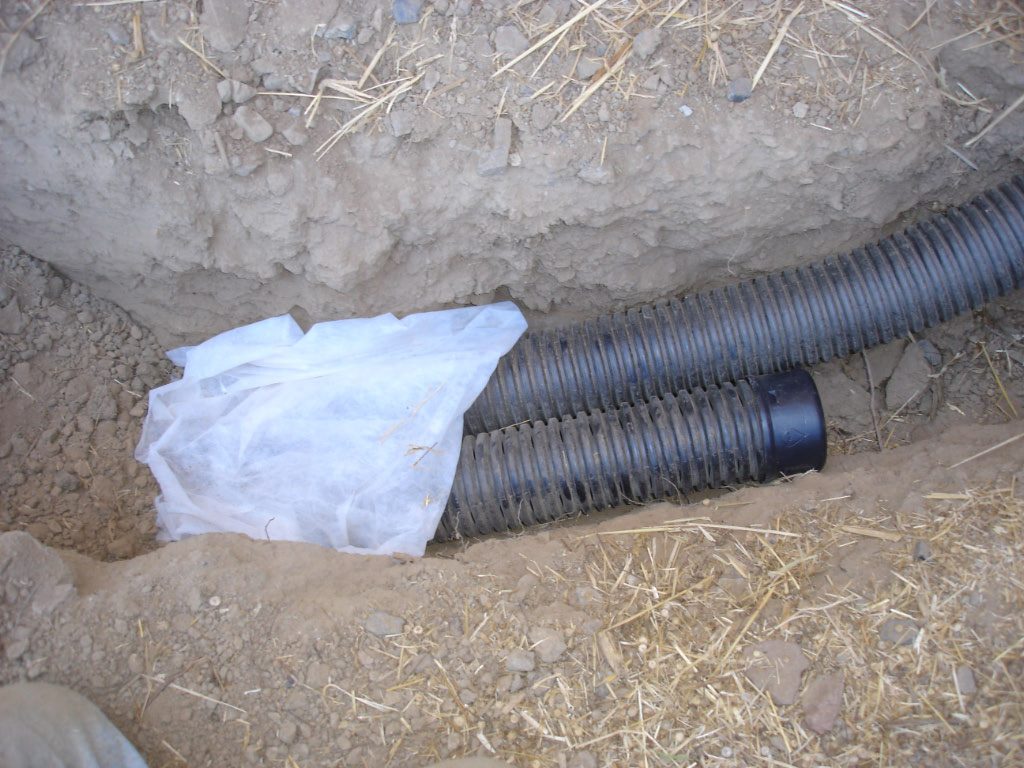
French Drain Installation for Hutto homes
Hutto sits well inside the Blackland Prairie belt, where the soil is heavy, dark clay that takes in water slowly and then clings to it. The land around US-79 and FM 1660 is flat to gently rolling, which means water on a Hutto lot has little reason to leave. A French drain gives it a reason. The trench collects soaked soil water along a fence, a patio edge or a low back corner and moves it through perforated pipe to a place where it can safely go. The pipe is simple. The hard part, as in most clay suburbs, is finding that place on a lot with almost no fall. Fence posts set in concrete can act as little dams along a property line, trapping water on the uphill side, so check how the fence sits relative to the wet area.
Much of Hutto was built recently, and newer lots bring their own quirks. Builders often grade a lot to a minimum slope, then backfill utility trenches and the area around the foundation with loose fill that settles over the first few years. Water follows those soft paths and gathers where the fill sank. Before laying out a drain, walk the lot after rain and note where the standing water begins. Many subdivisions use a shared drainage plan, with swales and rear-lot easements feeding Cottonwood Creek or a nearby pond. Work inside those easements may need approval from the city or your HOA, so ask before cutting a trench. Ask a neighbor with a similar house whether they saw the same patterns, since lots in the same phase of a subdivision usually share a builder, fill and grading.
On flat Hutto lots, the outlet often decides the design. Options include a curb outlet, a storm inlet, a swale that daylights to a larger channel, or a pop-up emitter at the far edge of your own yard. Each needs enough elevation drop to keep the water moving. A string line and a level, or a laser, shows whether gravity can do it. If it cannot, the plan changes. Wrap gravel in nonwoven fabric to keep clay fines out, add a cleanout at the high end and call 811 at least two business days before digging. Texas Water Code section 11.086 bars damaging a neighbor with diverted water, so aim the exit carefully. Run a hose into the high end after backfilling and watch the exit for steady flow. Fill any trench settling in the first season with extra soil.
What to know in Hutto
Check the builder's drainage plan
Newer Hutto subdivisions usually came with a master drainage design, with swales and easements meant to carry water across many lots at once. Putting a French drain across one can interfere with it. Look at your plat, ask the HOA for the plan and check with the city before you pick a route. A call to the HOA management company often gets the plan faster than guessing.
Settled fill follows utility trenches
New homes sit on compacted fill, but trenches for water, sewer and electric lines settle at different rates. Water collects in those dips and runs along them toward the house. A drain placed to cross those trenches can collect water before it reaches the slab, but ask the crew to locate them first. Flag the trench route before digging to avoid surprises.
Flat ground limits depth
The pipe must slope toward the outlet, so on a flat lot the trench can get deep at the far end. That raises cost and the risk of hitting utilities. A shallower drain with a surface swale to carry water the last stretch can solve the same problem at lower depth. A surface swale costs less to build and is easy to maintain.
Signs you may need french drain installation
- Moss, algae, or mosquito activity in a low part of the yard
- Mud or water seeping into a garage or along a slab edge
- Soil washing away or forming gullies under downspouts
- Patches of dead grass in a pattern that follows a low area
How french drain installation works
It helps to know the difference between surface water and groundwater, because French drains handle the second one best. Surface water is runoff sheeting across the lawn after a storm. Groundwater is water that has soaked in and is moving sideways through the upper few feet of soil, often along the top of a denser clay layer. A French drain buried two to three feet deep catches that sideways flow. If your real problem is runoff skating across the surface, a catch basin, a swale, or regrading may be the better tool, and sometimes the best answer is a combination of two or three of them working together. A site visit that traces where water enters, collects, and leaves your lot usually shows which of these tools belongs in your plan.
Where the drain goes matters as much as how it is built. A common setup is a drain placed uphill of the area you want to protect, running across the slope so it can intercept water before it arrives. Another is a drain placed along the low edge of a wet area to pull water out of it. Many yards in the older parts of Pflugerville and Round Rock have just a few inches of fall across the whole lot, which means the pipe needs a careful slope, often about one percent or a bit more, to keep moving water. Crews check this with a transit level or laser, because a pipe that looks flat to the eye can easily hold water instead of moving it.
What to expect on a Hutto visit
- 01
Walk the property and read the water
We look at where water pools, where it enters the yard, and how it behaves a day after rain. We check lot slope, gutter outlets, neighboring grades, and fence lines. Photos of the yard during or right after a storm help a lot. This visit sets the drain's location and shows whether a French drain is the right tool at all.
- 02
Call 811 and mark the layout
Texas law requires a call to 811 at least two business days before digging, weekends and holidays excluded. Utilities mark their public lines for free. We also paint the planned trench path, and we flag private lines such as irrigation, which public locators usually do not mark, so the trench avoids them.
- 03
Set the slope and dig the trench
The trench is cut to a consistent grade, usually about one percent or steeper, and to a depth that suits the problem. We check the bottom with a laser or level before anything goes in. Sod and topsoil are set aside when possible so the lawn can be put back with less visible scarring.
- 04
Line, pipe, and gravel
Filter fabric lines the trench so clay and silt cannot clog the gravel. Washed stone goes down first, then perforated pipe with holes facing down in most designs, then more stone. The fabric folds over the top. Clean, rounded or angular washed stone is used rather than soil-laden fill that would plug the voids.
- 05
Build the outlet and connections
The solid pipe leading away from the perforated section runs to the chosen exit, such as a daylight point, a pop-up emitter, a catch basin, or a dry well where soil allows. Cleanouts or inspection points are added at turns where practical, so the line can be flushed later if it ever slows.
- 06
Test, backfill, and restore
We run water through the system to confirm flow and to watch the outlet. After a pass, the trench is topped with soil or a layer of decorative stone, and the area is raked and graded. We review the finished layout with you, including where the cleanouts are and what to watch after the first heavy rain.
Our approach in Hutto
- We walk the property in Hutto and trace where water comes from, where it collects and where it can legally go
- We explain what we find in plain language, with photos where they help
- Repairs and installs are planned around Williamson County permitting requirements
- You get written options before any repair work begins
- We call 811 to mark buried utilities before any digging
Soil and drainage conditions around Hutto
In newer Hutto neighborhoods, we often find swales that were cut at the minimum slope and then lost fall as the fill settled. Sod laid over a thick layer of disturbed clay can hold water like a bathtub, and a fence built across a swale blocks the flow entirely. Patios and walks poured on new fill may sink within a few years if roof water runs beside them. In older parts of town, the typical complaints are driveways cracked into separate panels, garage aprons that tilt toward the house and yards where decades of landscaping buried the original grade. Drainage help can include regrading, French drains, underground downspout drains, catch basins and foam concrete leveling. We do not do structural foundation repair, so if you see cracked brick or doors that stick, bring in a structural engineer. Take dated photos after storms, because they help us see exactly where water gathers and how long it stays.
French Drain Installation questions from Hutto homeowners
Why is my new Hutto backyard so wet after rain?
Blackland clay absorbs water slowly, and new lots often have flat grading and loose backfill that holds extra water. Gutters that empty at the slab and fences that block the flow add to it. A French drain helps with soaked soil, but regrading and downspout work are often part of the answer. Check that gutters are not dumping into the wet area.
Can I install a French drain in an HOA drainage easement?
Maybe, but not without checking. Easements are meant to carry water for the whole neighborhood, and changes can affect neighbors. Ask your HOA and the City of Hutto what is allowed before digging. Check your plat for easement locations, and call 811 at least two business days before work begins. A recorded plat lists easement widths and uses.
How long will a French drain last in Hutto clay?
With fabric-wrapped gravel, solid pipe at the outlet and a cleanout for flushing, a French drain can serve for many years. Clay silt is the usual cause of failure when fabric is skipped. There is no guaranteed lifespan, so annual checks of the outlet and cleanout help you catch trouble early. Do not let sod or mulch bury the cleanout.
Do I need to call 811 before a French drain is dug?
Yes. Texas law requires anyone who excavates, homeowners included, to contact Texas811 at least two business days before digging, not counting weekends or holidays. Public utilities mark their lines for free. Private lines such as irrigation, yard lighting, and some gas lines to outbuildings may not be marked, so tell the crew what you know. Call early so your start date is not delayed.
Where does the water from a French drain end up?
It must go somewhere that will not harm anyone. Typical outlets are a lower part of your own lot, a pop-up emitter, a catch basin, a dry well, or a street connection where your city allows it. Texas Water Code Section 11.086 prohibits diverting surface water in ways that damage a neighbor's property. For a dispute, talk with a lawyer.
Will a French drain clog in clay soil?
Poorly built ones can. Clay and silt slip into gravel and pipe when there is no filter fabric, or when soil rather than clean stone is used. A properly wrapped drain with washed gravel stays open for many years. Cleanouts let a line be flushed. Tree roots are the other common culprit, so keep the line away from large trees when you can. A cleanout makes that easy.
More about french drain installation → · All services in Hutto →
Need french drain installation in Hutto?
Call or send a request. We will look at where the water goes, check the grade and give you a written estimate.