Manor · Travis County
French Drain Installation in Manor, TX
A French drain works in Manor when water collects at a low spot or runs along a fence. Houston Black clay is slow to drain, so the gravel trench becomes the path water uses. We wrap it in filter fabric to keep clay fines out, slope the pipe to a legal outlet and keep the trench away from sprinkler lines after 811 locates. Probing the ground along the route happens before any trenching starts.
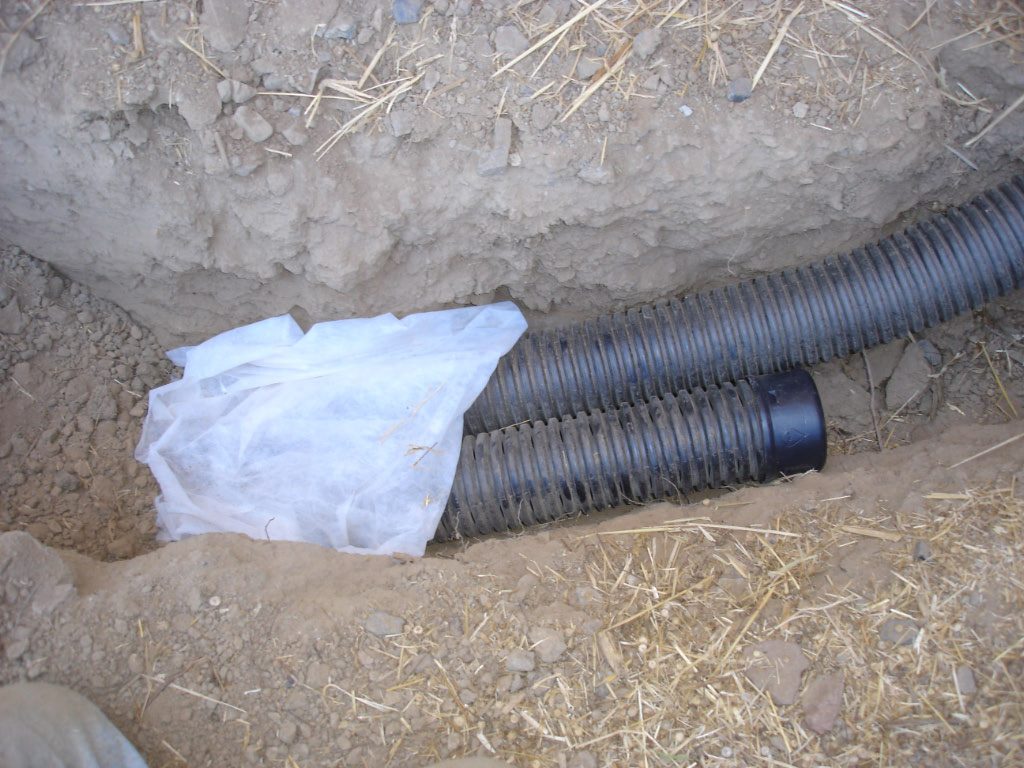
French Drain Installation for Manor homes
Manor sits in the Blackland Prairie, and the soil under most yards there is dark, heavy clay. That clay takes in water slowly and holds on to it. After a hard rain, a low spot in a Manor backyard can stay soggy for days because the clay beneath it is still saturated, even when the sun is out. A French drain gives that trapped water somewhere to go. It is a sloped trench lined with fabric, filled with clean gravel, and fitted with perforated pipe that collects water below the surface and carries it to a safe outlet. The usual sign that a French drain is the right tool is a wet strip that shows up in the same place after every storm, such as the base of a fence or the line where a slope flattens out. Grass there turns yellow, and a screwdriver pushes in easily long after other areas dry.
The tricky part in Manor is the outlet. Many of the newer lots east of US-290 are fairly flat, and the lot lines are tight, so there is not much room to build fall into a pipe. A French drain only works if the pipe keeps dropping toward a place where water is allowed to go, such as a street curb, a storm inlet, or a grassy swale that drains off your property. On a flat lot we plan the grade first, often with a laser level, before any digging starts. If the fall is too shallow, a pop-up emitter or a small pumped basin may be the better choice. A pop-up emitter at the end of the run is common on Manor lots, because it lets water leave onto a lawn that slopes away without needing a curb connection.
Clay also changes how the trench is built. The gravel needs a filter fabric wrapped around it, or fine clay particles move in and clog the pipe over time. The top of the trench should stay open to surface water, with a shallow cap of gravel or sod, so rain can drop in instead of running across. Before any work, call 811 at least two business days ahead so buried lines are marked, and check with your HOA about rules for changing drainage in side yards or along back lot lines, where utility easements are common in Manor subdivisions. Gravel choice matters too. Washed rock about three-quarters of an inch across moves water well and resists packing. Pea gravel or crushed rock with fines can silt in. After the work, the sod goes back in a way that keeps the surface drain path open.
What to know in Manor
Flat lots limit pipe slope
Much of Manor is gently rolling to nearly level. A French drain needs steady downhill fall, and a common target is about one inch of drop for every eight feet of pipe. We measure the lot first so we know where water can physically and legally exit before anyone promises a layout or a price. Ask for the plan on paper, including pipe slope and the exact outlet point, so you can show your HOA if they ask.
Do not push water onto a neighbor
Texas Water Code Section 11.086 says you cannot divert or impound natural surface water so that it floods someone else's land. In close-set Manor subdivisions, a poorly aimed drain outlet can create exactly that problem. Check with your city or HOA first, and talk to a lawyer if a dispute is already underway. A pro should also check that the outlet does not sit in a drainage easement where changes need approval.
Utilities run close to the surface
Fiber, gas, electric and water service lines often sit in the same narrow side yards where a drain would go. Texas811 locate marks show their paths. Calling two business days before digging is required for homeowners too, not just contractors, and it costs nothing. Hand-dig near any marked line. A shovel dropped through a marked line can cut service to the whole street, so respect every flag.
Signs you may need french drain installation
- Mud or water seeping into a garage or along a slab edge
- Soil washing away or forming gullies under downspouts
- Patches of dead grass in a pattern that follows a low area
- A neighbor's runoff or a slope that sends water toward your house
How french drain installation works
Where the drain goes matters as much as how it is built. A common setup is a drain placed uphill of the area you want to protect, running across the slope so it can intercept water before it arrives. Another is a drain placed along the low edge of a wet area to pull water out of it. Many yards in the older parts of Pflugerville and Round Rock have just a few inches of fall across the whole lot, which means the pipe needs a careful slope, often about one percent or a bit more, to keep moving water. Crews check this with a transit level or laser, because a pipe that looks flat to the eye can easily hold water instead of moving it.
The exit point is where many do-it-yourself drains fail. Water has to go somewhere, and in a subdivision with small lots that somewhere is limited. Options include a daylight outlet at a lower part of your lot, a connection to a catch basin or pop-up emitter, a dry well in soil that can accept it, or the street curb where a city allows it. Texas Water Code Section 11.086 says you cannot divert or impound the natural flow of surface water in a way that damages a neighbor's property, so pointing a pipe at the fence line is not a solution. Rules about what you may connect to differ by city, so check with your city or HOA before you finalize the exit.
What to expect on a Manor visit
- 01
Walk the property and read the water
We look at where water pools, where it enters the yard, and how it behaves a day after rain. We check lot slope, gutter outlets, neighboring grades, and fence lines. Photos of the yard during or right after a storm help a lot. This visit sets the drain's location and shows whether a French drain is the right tool at all.
- 02
Call 811 and mark the layout
Texas law requires a call to 811 at least two business days before digging, weekends and holidays excluded. Utilities mark their public lines for free. We also paint the planned trench path, and we flag private lines such as irrigation, which public locators usually do not mark, so the trench avoids them.
- 03
Set the slope and dig the trench
The trench is cut to a consistent grade, usually about one percent or steeper, and to a depth that suits the problem. We check the bottom with a laser or level before anything goes in. Sod and topsoil are set aside when possible so the lawn can be put back with less visible scarring.
- 04
Line, pipe, and gravel
Filter fabric lines the trench so clay and silt cannot clog the gravel. Washed stone goes down first, then perforated pipe with holes facing down in most designs, then more stone. The fabric folds over the top. Clean, rounded or angular washed stone is used rather than soil-laden fill that would plug the voids.
- 05
Build the outlet and connections
The solid pipe leading away from the perforated section runs to the chosen exit, such as a daylight point, a pop-up emitter, a catch basin, or a dry well where soil allows. Cleanouts or inspection points are added at turns where practical, so the line can be flushed later if it ever slows.
- 06
Test, backfill, and restore
We run water through the system to confirm flow and to watch the outlet. After a pass, the trench is topped with soil or a layer of decorative stone, and the area is raked and graded. We review the finished layout with you, including where the cleanouts are and what to watch after the first heavy rain.
Our approach in Manor
- We walk the property in Manor and trace where water comes from, where it collects and where it can legally go
- We explain what we find in plain language, with photos where they help
- Repairs and installs are planned around Travis County permitting requirements
- You get written options before any repair work begins
- We call 811 to mark buried utilities before any digging
Soil and drainage conditions around Manor
Local rules matter. Many Manor neighborhoods have HOAs with approval processes, and some lots sit on recorded drainage easements where changes may need city review. We cannot state the City of Manor's grading and permit requirements, so contact the city and your HOA before you start. Texas Water Code Section 11.086 makes it unlawful to divert or impound natural surface water so that it damages a neighbor's property, so your drain outlet should go to the street, a proper swale or an approved point. If a dispute develops, see an attorney. Texas law also requires everyone, homeowners included, to contact Texas811 at least two business days before digging. With gas, water, electric and fiber lines being added as Manor grows, that call is worth making every time. Keep your approval letters and 811 ticket number together in one folder so you can show them if a neighbor or the city asks.
French Drain Installation questions from Manor homeowners
Will a French drain fix a soggy yard in Manor clay?
It often helps, but only if the water has an exit. Clay moves water toward the pipe slowly, so a French drain works best where water collects on top of the ground or just below it. If the whole lot is flat with no outlet, we may suggest a catch basin, pop-up emitter or regrading along with the drain. Water that reaches the pipe also needs a free-flowing exit, so check that outlet after each major storm.
How deep is a typical residential French drain?
Many residential trenches run roughly 12 to 24 inches deep, depending on the grade and where the water needs to leave the yard. Deeper is not always better. The pipe must still slope to an outlet, and deeper trenches raise the chance of hitting utilities, so the locate call always comes first. A rule of thumb is that trench depth should follow the pipe slope, not the other way around.
Can I install a French drain myself in Manor?
You can, and many homeowners do. The hard parts are holding a consistent slope, finding an allowed outlet, and avoiding buried lines. Clay is also heavy and sticky when wet. If the drain would run near the foundation or toward a neighbor, it is worth having a pro look at your plan before you dig. If you do try it, rent a trench level and dig a short test run to confirm the fall before committing to the full length.
Where does the water from a French drain end up?
It must go somewhere that will not harm anyone. Typical outlets are a lower part of your own lot, a pop-up emitter, a catch basin, a dry well, or a street connection where your city allows it. Texas Water Code Section 11.086 prohibits diverting surface water in ways that damage a neighbor's property. For a dispute, talk with a lawyer.
Will a French drain clog in clay soil?
Poorly built ones can. Clay and silt slip into gravel and pipe when there is no filter fabric, or when soil rather than clean stone is used. A properly wrapped drain with washed gravel stays open for many years. Cleanouts let a line be flushed. Tree roots are the other common culprit, so keep the line away from large trees when you can. A cleanout makes that easy.
Can a French drain protect my foundation?
It can help. By pulling extra water out of the soil near the slab, it reduces the wet and dry swings that stress foundations on expansive clay. It is not a foundation repair. If you see widening cracks, sticking doors, or gaps at trim, have a structural engineer or foundation repair company evaluate the house. Drainage and structural repair are separate jobs.
More about french drain installation → · All services in Manor →
Need french drain installation in Manor?
Call or send a request. We will look at where the water goes, check the grade and give you a written estimate.