Pflugerville · Travis County
French Drain Installation in Pflugerville, TX
In Pflugerville, a French drain is often the right answer for a low back yard where clay holds water after every storm. We place the drain along the wet zone, wrap the gravel in filter fabric so clay fines do not clog it, and send the outflow to the street, a swale or an approved easement. Check with your HOA and the city if the outlet touches a drainage easement. We keep the trench clear of tree roots and sprinkler lines where we can.
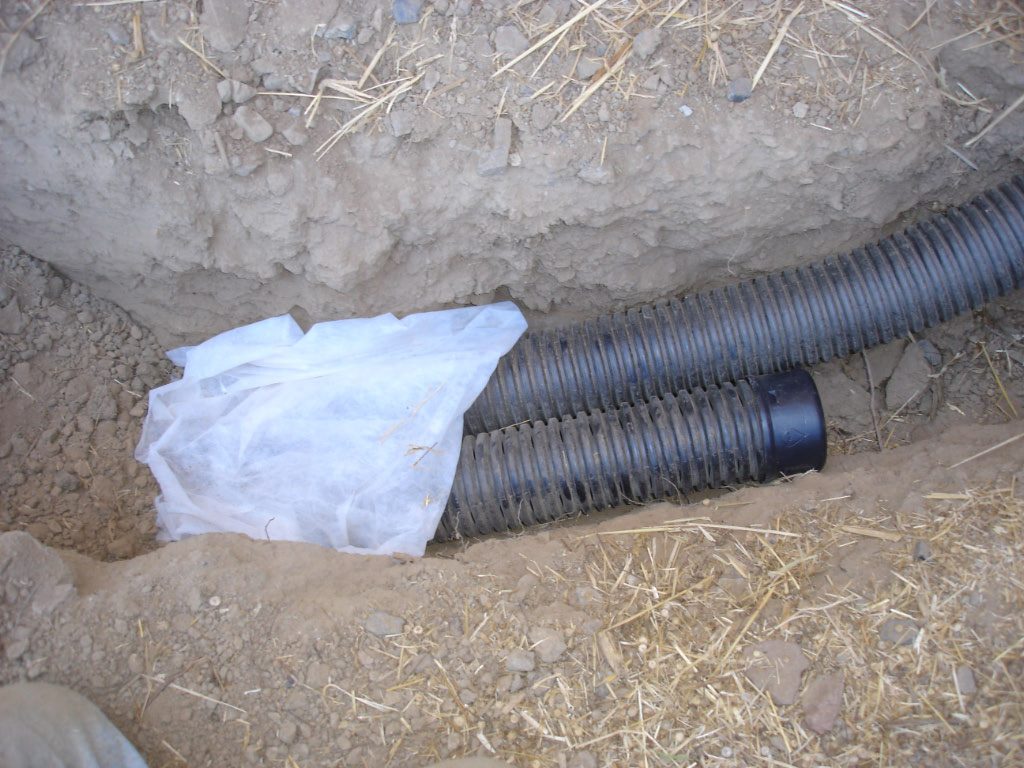
French Drain Installation for Pflugerville homes
A French drain is a gravel-filled trench with a perforated pipe that gives soaked soil an easy path to follow. In Pflugerville the pipe is only half the story. Much of the city sits on dark Blackland Prairie clay, which absorbs water slowly and then holds it. After a hard rain the top foot of soil can turn to paste while the clay below stays nearly sealed. A French drain intercepts that trapped water before it pools against a fence line, a patio or the edge of a slab. Because clay barely lets water move downward, the trench needs a clear place to send what it collects, and that outlet decides whether the system works. Water also tends to follow the path where builders trenched utilities, because the backfill there is looser than the clay around it. A French drain that crosses those old trenches can end up collecting more than the yard itself, so the layout should account for them.
Many Pflugerville lots slope gently toward Gilleland Creek or one of the small channels that feed it. A gentle slope is a challenge, because a French drain needs steady fall, usually at least one percent, so the water keeps moving. On flat lots near Pecan Street or in subdivisions east of SH 130, the outlet often has to run to a street curb, a storm inlet or a pop-up emitter well away from the house. Daylighting the pipe into a swale only works when the grade allows it and the neighbor is not downhill of the exit. Texas Water Code section 11.086 makes it unlawful to divert surface water in a way that damages a neighbor's property, so the exit point needs careful planning. On sloped lots, the drain usually runs across the hill, perpendicular to the flow, rather than straight down it. Placing it uphill of the problem area catches water before it gets there, instead of chasing it afterward.
Filter fabric and washed gravel matter more in clay than in sandy ground. Clay fines wash into a bare trench and clog the stone within a few seasons, so the gravel should be wrapped in nonwoven fabric. Rigid perforated pipe set with the holes down on a gravel bed holds its shape under fill and mower weight. Keep the line away from live oak and crape myrtle roots where possible, and add cleanouts at turns so a hose or camera can reach the pipe later. Call 811 at least two business days before any digging, since gas, water and fiber lines often follow Pflugerville lot lines. Test the finished line with a hose at the high end and watch the outlet. Steady flow within a few minutes tells you the pipe is clear and sloped correctly.
What to know in Pflugerville
Know the outlet first
Decide where the water will go before anyone picks up a shovel. Options include a curb outlet, a storm inlet, a daylight exit into a swale or a pop-up emitter. Many Pflugerville subdivisions have recorded drainage easements along rear lot lines, and work inside them can need approval. Check with the city and your HOA first.
Keep the trench off the slab
In dry summers the clay shrinks and opens cracks that carry water straight down beside a slab. A trench dug too close to the house can also pull moisture from the soil unevenly. Setting the drain several feet out and pairing it with good grading protects the foundation. A structural engineer should evaluate any wall or door movement.
Plan for cleanouts and roots
Pflugerville yards fill in with sod, shrubs and trees, and roots find any pipe that holds water. Cleanout risers at bends and at the high end let a pro flush silt out of the line years later. Without them, a clogged drain usually means digging up the whole run again.
Signs you may need french drain installation
- Standing water in the yard that is still there two or three days after rain
- A soft, spongy strip of lawn along the foundation or fence line
- Moss, algae, or mosquito activity in a low part of the yard
- Mud or water seeping into a garage or along a slab edge
How french drain installation works
A French drain is simpler than it sounds. Crews dig a narrow trench, line it with filter fabric, lay a perforated pipe on a bed of washed gravel, and cover the pipe with more gravel before closing the fabric over the top. Water that moves through the soil reaches the gravel, drops into the pipe, and rolls downhill to a place where it can leave your property safely. The name is usually traced to Henry Flagg French, a Massachusetts farm writer whose 1859 book Farm Drainage described the method, and not to France. The design has barely changed since, because the physics is so basic: water follows the easiest path, and gravel and pipe are a much easier path than packed soil. The result is a quiet, hidden system that works every time it rains without pumps or power.
Around Pflugerville, the reason a French drain helps has a lot to do with the ground itself. The Blackland Prairie soils east of I-35 are heavy clay that absorbs water slowly. A rain that a sandy lot would swallow in an hour can sit in a clay yard for days, because the tiny clay particles hold water tightly and leave little room for it to drain through. A French drain gives that trapped water a shortcut. It does not make clay drain like sand, but it creates a continuous underground channel that intercepts water before it pools against a slab, a fence line, or a low corner of your lawn. After a wet spring, that slow absorption is exactly why lawns near Gilleland Creek and Wilbarger Creek can stay muddy long after the sky clears.
What to expect on a Pflugerville visit
- 01
Walk the property and read the water
We look at where water pools, where it enters the yard, and how it behaves a day after rain. We check lot slope, gutter outlets, neighboring grades, and fence lines. Photos of the yard during or right after a storm help a lot. This visit sets the drain's location and shows whether a French drain is the right tool at all.
- 02
Call 811 and mark the layout
Texas law requires a call to 811 at least two business days before digging, weekends and holidays excluded. Utilities mark their public lines for free. We also paint the planned trench path, and we flag private lines such as irrigation, which public locators usually do not mark, so the trench avoids them.
- 03
Set the slope and dig the trench
The trench is cut to a consistent grade, usually about one percent or steeper, and to a depth that suits the problem. We check the bottom with a laser or level before anything goes in. Sod and topsoil are set aside when possible so the lawn can be put back with less visible scarring.
- 04
Line, pipe, and gravel
Filter fabric lines the trench so clay and silt cannot clog the gravel. Washed stone goes down first, then perforated pipe with holes facing down in most designs, then more stone. The fabric folds over the top. Clean, rounded or angular washed stone is used rather than soil-laden fill that would plug the voids.
- 05
Build the outlet and connections
The solid pipe leading away from the perforated section runs to the chosen exit, such as a daylight point, a pop-up emitter, a catch basin, or a dry well where soil allows. Cleanouts or inspection points are added at turns where practical, so the line can be flushed later if it ever slows.
- 06
Test, backfill, and restore
We run water through the system to confirm flow and to watch the outlet. After a pass, the trench is topped with soil or a layer of decorative stone, and the area is raked and graded. We review the finished layout with you, including where the cleanouts are and what to watch after the first heavy rain.
Our approach in Pflugerville
- We walk the property in Pflugerville and trace where water comes from, where it collects and where it can legally go
- We explain what we find in plain language, with photos where they help
- Repairs and installs are planned around Travis County permitting requirements
- You get written options before any repair work begins
- We call 811 to mark buried utilities before any digging
Soil and drainage conditions around Pflugerville
Water moves through Pflugerville along a handful of named creeks. Gilleland Creek begins northwest of town and runs about 27 miles to the Colorado River, and it was named for James Gilleland, an early settler. Wilbarger Creek rises north of town and drains east toward Bastrop County. Lake Pflugerville, the city's man-made lake, sits in the larger drainage network, and the city has built trails along the creek corridors. The terrain is gently rolling rather than steep, which sounds harmless until you remember that a few inches of fall across a whole subdivision sends sheet flow across many back yards before it reaches a ditch. Homes on the low side of a street, or backing onto a greenbelt or drainage easement, often receive the water that came off five or six lots uphill. Knowing which way your lot drains, and who is upstream, is the first real step in any fix. A fence line or raised bed can be enough to dam that sheet flow against a back wall.
French Drain Installation questions from Pflugerville homeowners
Will a French drain fix standing water in my Pflugerville backyard?
It depends on where the water comes from. A French drain handles water that soaks in and sits just under the surface, like a wet strip along a fence. It does little for a low spot that fills from roof runoff or sheet flow. A site visit usually shows whether you need a French drain, regrading, or both. If roof gutters empty near the problem area, solve that first, since a French drain can be overwhelmed by gutter water it was never sized for.
How deep does a French drain need to be in clay soil?
Depths commonly run from about 12 inches at the shallow end to 24 inches or more as the pipe slopes toward the outlet. The right depth depends on your grade, the outlet height and what utilities you find. Going deeper than needed adds cost without moving more water, so the layout should follow the slope of the yard. Shallow trenches also lower the chance of hitting deep utilities, but the 811 locate still comes first.
Do I need a permit or HOA approval for a French drain in Pflugerville?
Often not for a simple lot drain, but it varies. Work in a drainage easement, a floodplain or along a shared property line can trigger review. Many HOAs also want to approve changes to grading. Check with the City of Pflugerville and your HOA before digging, and call 811 at least two business days ahead. Your plat or closing documents often list recorded easements, and a copy is usually available from the county or your title company.
Will a French drain fix standing water in my yard?
Often yes, when the water comes from soil that is saturated and has nowhere to go. A French drain collects that underground water and moves it to an exit. It works less well when the problem is surface runoff, a flat yard with no outlet, or a leaking pipe. A site visit sorts out which problem you have before any digging starts.
How deep does a French drain need to be?
Many residential drains are buried roughly 18 to 36 inches deep, but depth depends on the water source, the slope, and where the outlet is. Deeper is not always better, because the pipe must still slope to its exit. Near a foundation, depth is kept shallow enough to avoid disturbing the soil that supports the slab. A site visit settles the number.
Do I need to call 811 before a French drain is dug?
Yes. Texas law requires anyone who excavates, homeowners included, to contact Texas811 at least two business days before digging, not counting weekends or holidays. Public utilities mark their lines for free. Private lines such as irrigation, yard lighting, and some gas lines to outbuildings may not be marked, so tell the crew what you know. Call early so your start date is not delayed.
More about french drain installation → · All services in Pflugerville →
Need french drain installation in Pflugerville?
Call or send a request. We will look at where the water goes, check the grade and give you a written estimate.